
From Old Basement
to Dream Space
Follow a real underpinning project through every phase — excavation, formwork, concrete, drainage, insulation, and finishing. 3 weeks, 26 steps, 34 photos, zero mystery.
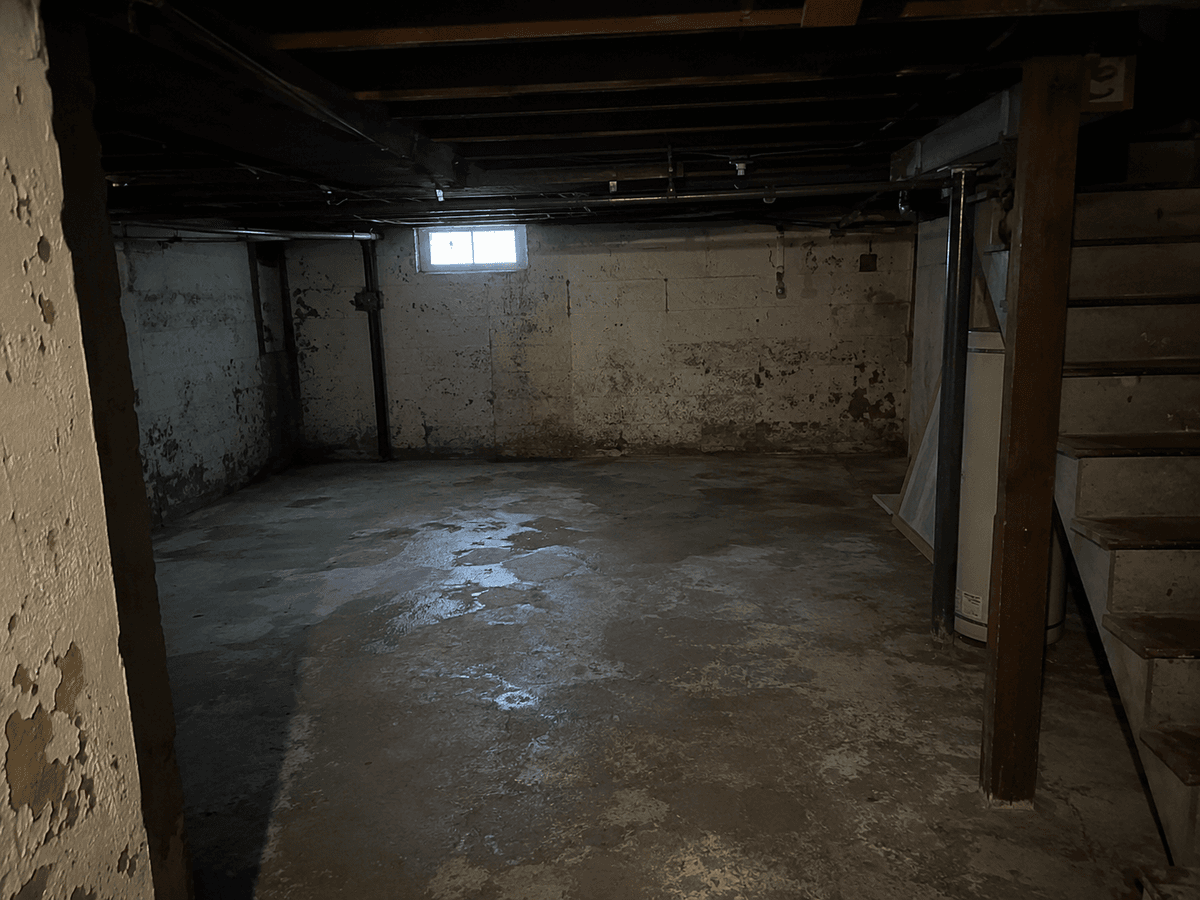
Dark, low-ceiling, unfinished
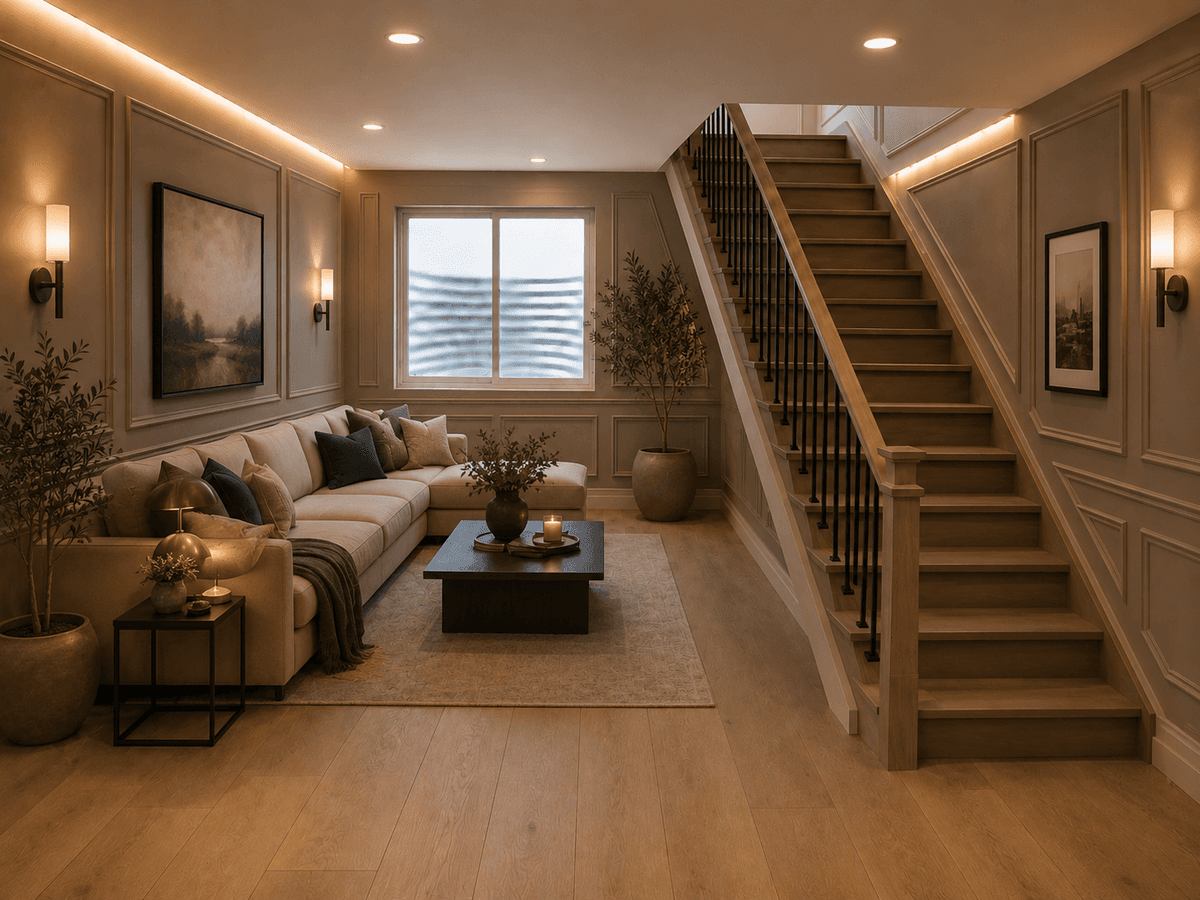
Bright, warm, full-height living space
Written by Pavel Vysotckii
BCIN-certified building designer & Quantity Surveyor · Updated June 2026
Phase 1 of 5
Assessment & Mobilization
The Empty Basement
Every project starts here — a low-ceiling, unfinished basement with aging foundation walls, moisture stains, and limited headroom. This is the "before" that homeowners want to transform.
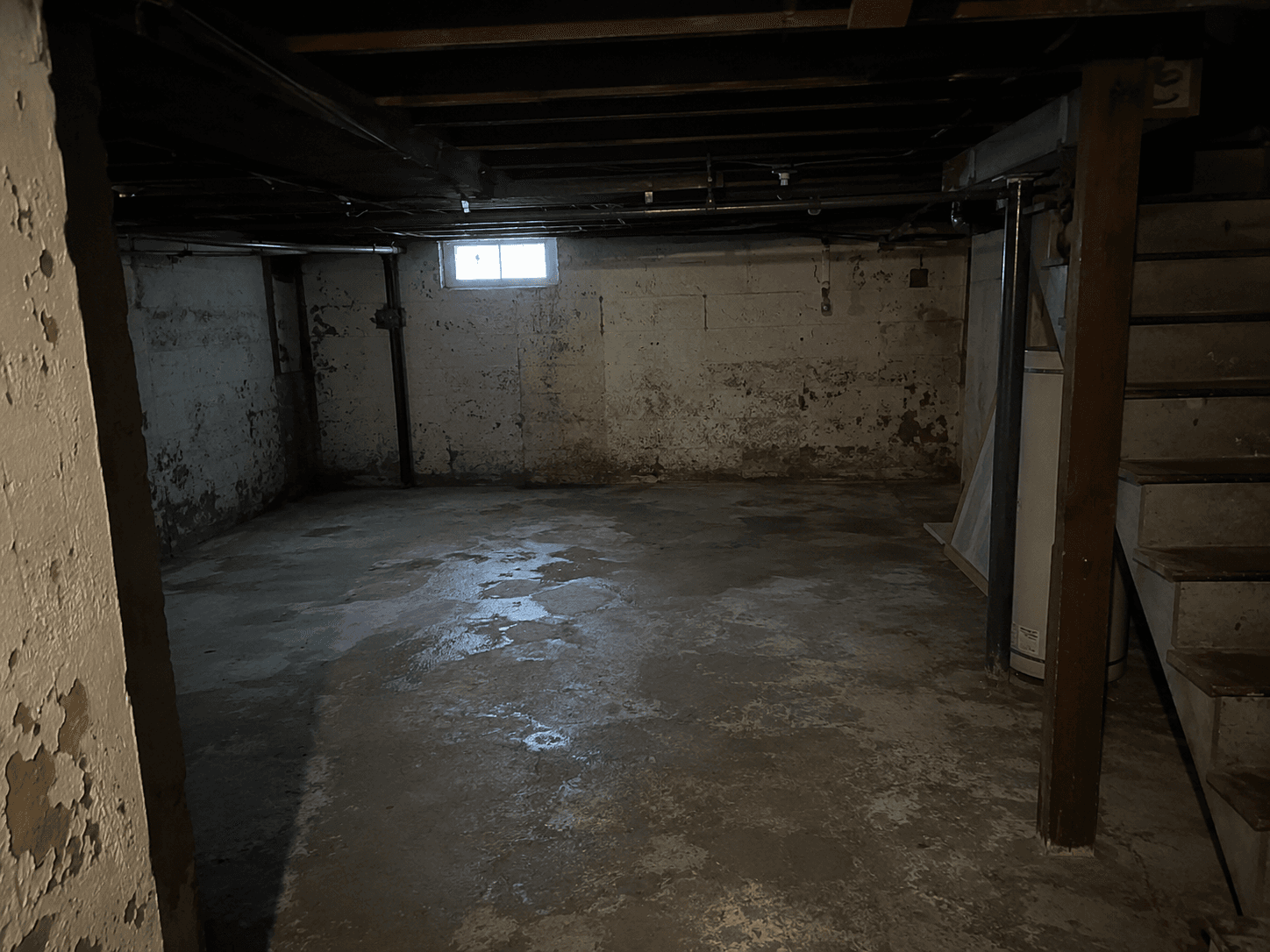
Crew & Equipment Arrive
The contractor mobilizes to the site — tools, safety equipment, and materials are staged. Protective measures are set up to contain dust and debris.
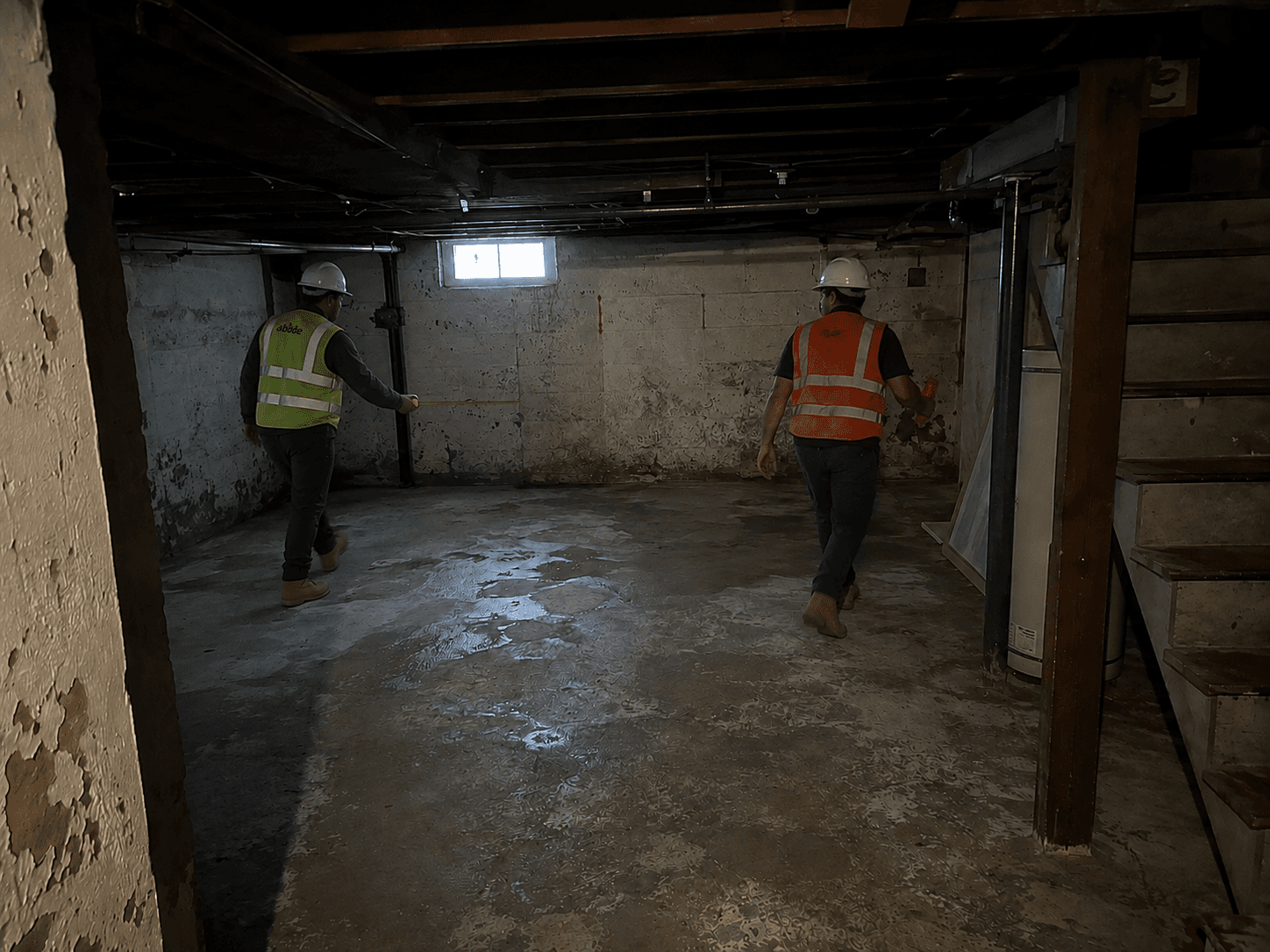
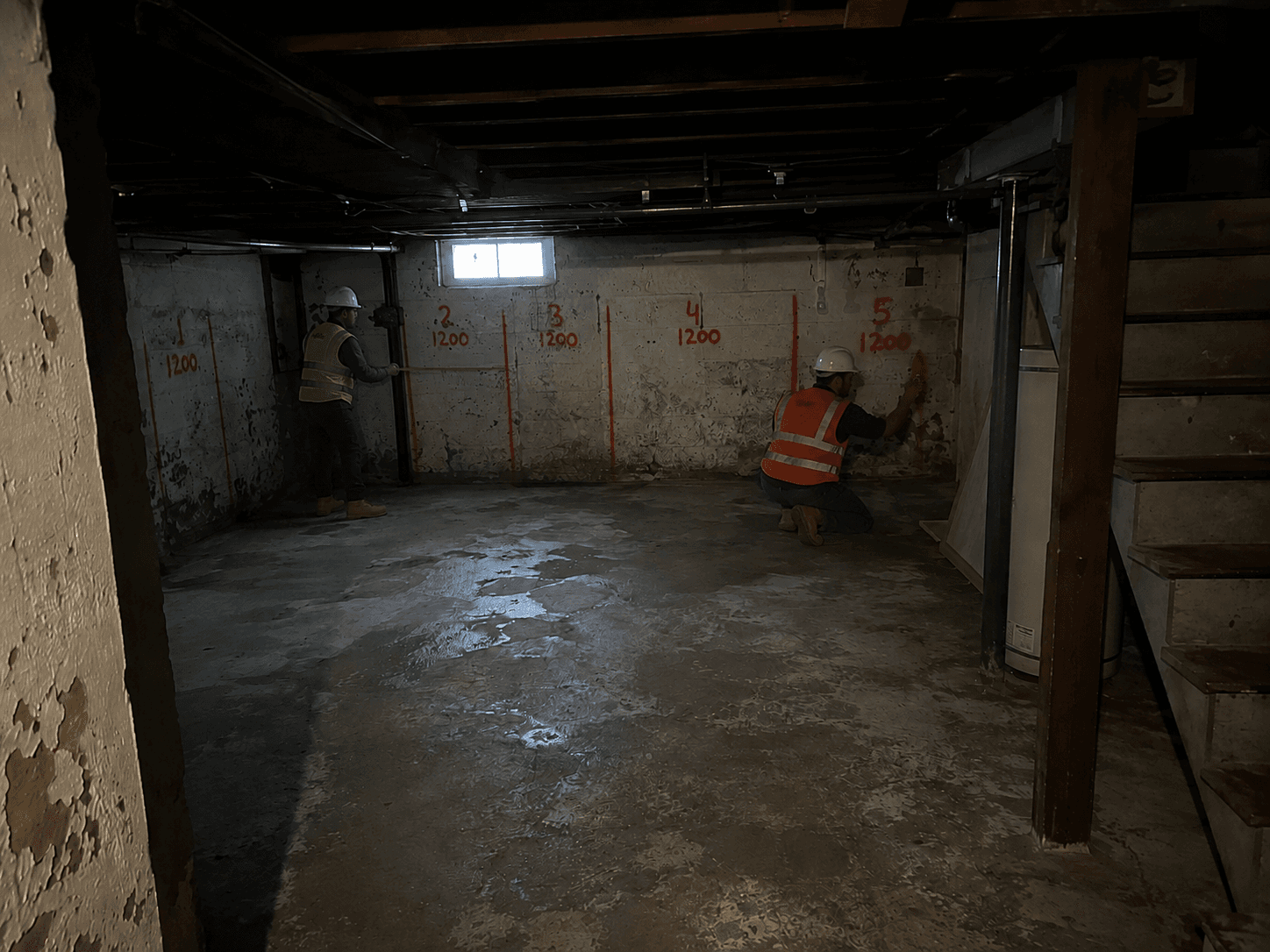
Section Marking (1200 mm Wide)
The foundation is divided into alternating sections, each 1200 mm wide. Sections are excavated one at a time to maintain structural integrity — never two adjacent sections simultaneously.
Sections are staggered to ensure the existing foundation is always supported on both sides of the active work zone.
Phase 2 of 5
Excavation
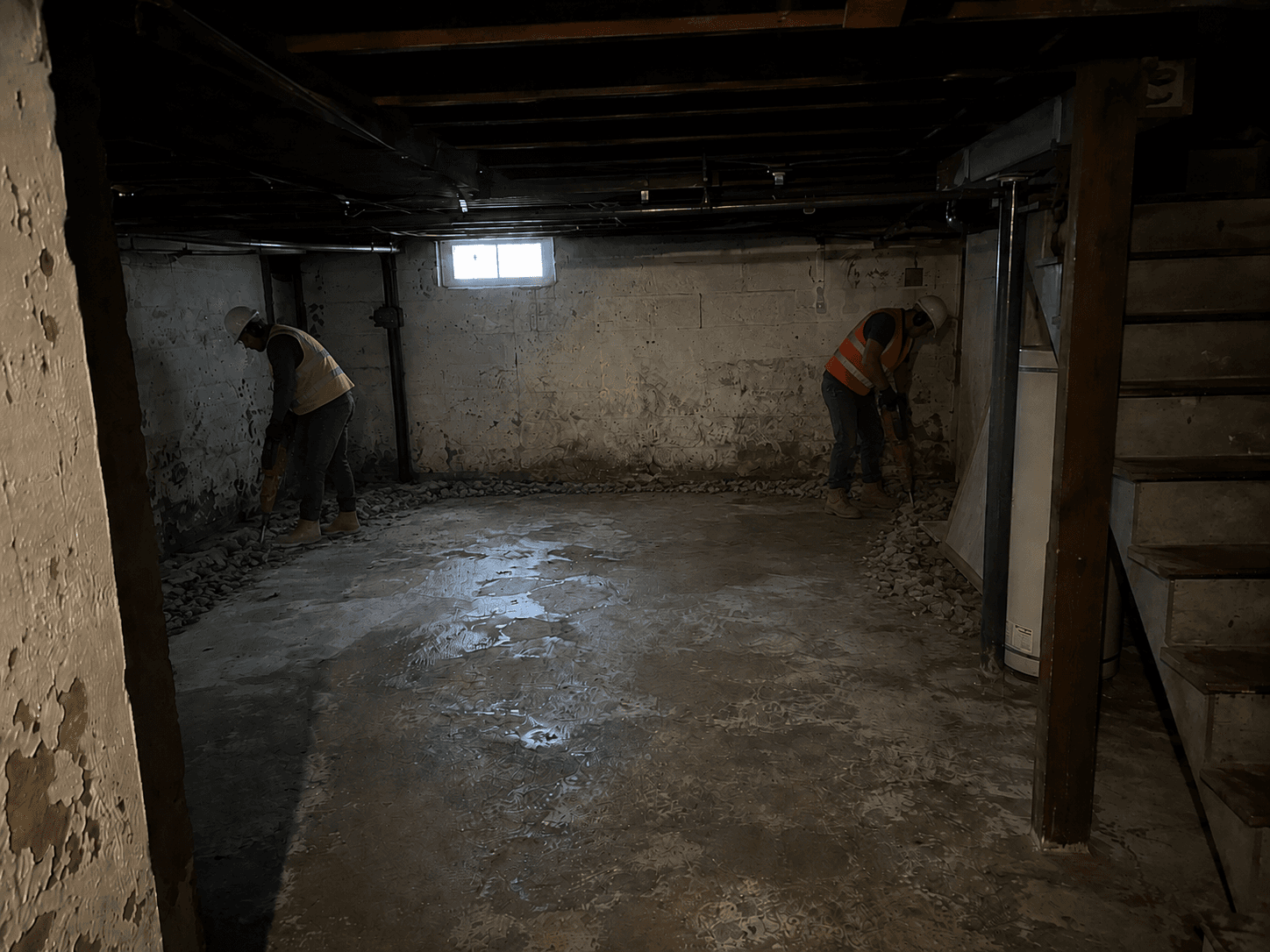
Break Out Existing Slab
The concrete floor slab is broken out at least 2400 mm away from the section being underpinned — giving safe working distance and room for excavation.
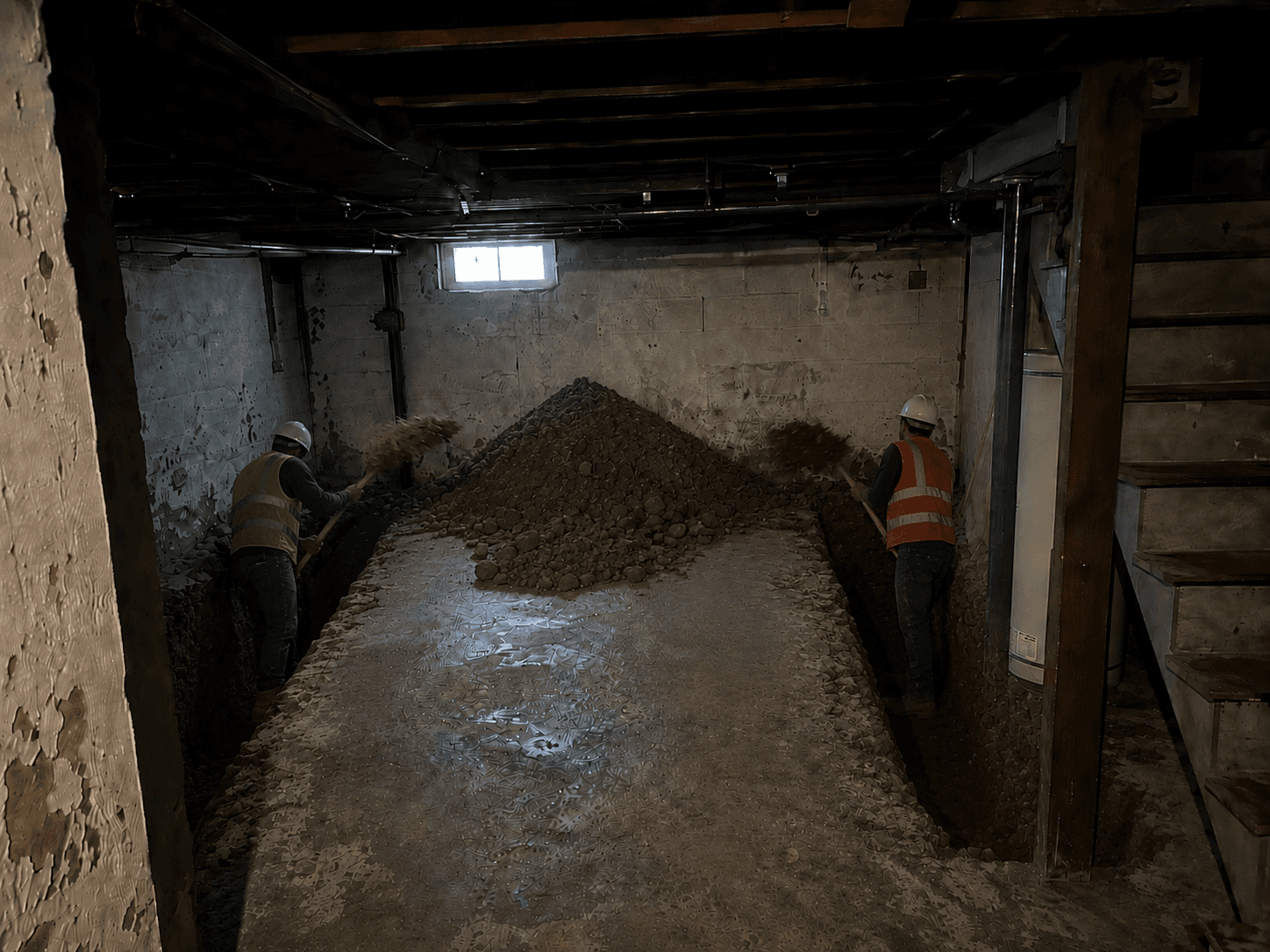
Excavation to Required Depth
Each section is hand-excavated to the required depth — typically 4 feet below the existing footing. This is where the new, deeper foundation will be cast.
Depth is determined by the structural engineer based on soil conditions and desired ceiling height.
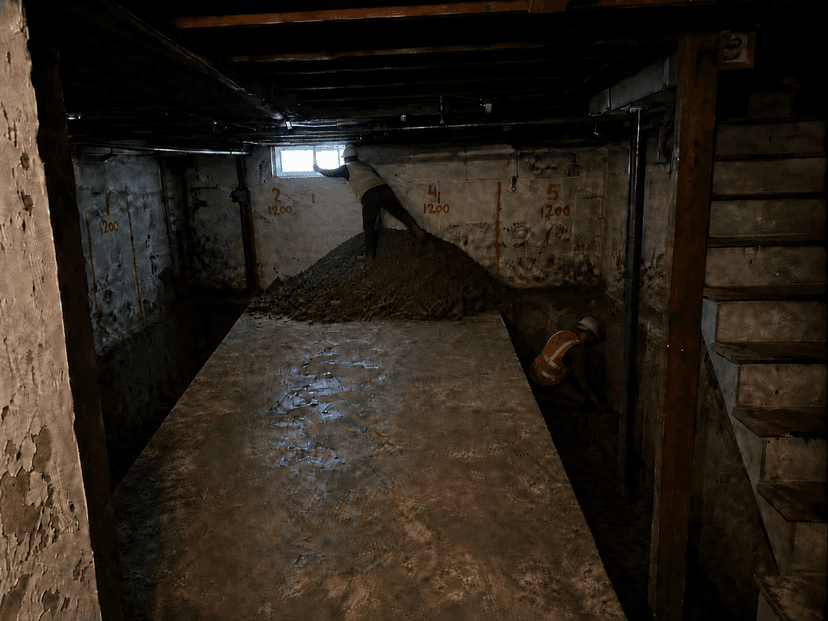
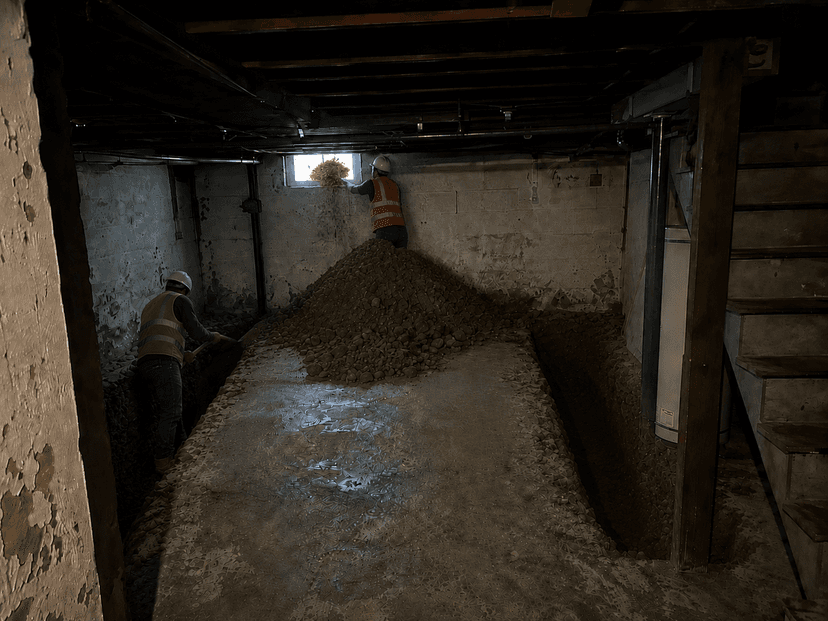
Soil Removal
Excavated soil is removed from the basement — often through windows or an exterior opening. On tight urban lots, this is one of the most labour-intensive parts of the job.
Phase 3 of 5
Underpinning — Section by Section
We work 6 days a week. Each section is excavated one day, then poured the next. We alternate sections (1 → 4 → 2 → 5 → 3 → 6) so concrete has time to cure before the adjacent section is touched. This pattern repeats across 12 working days.
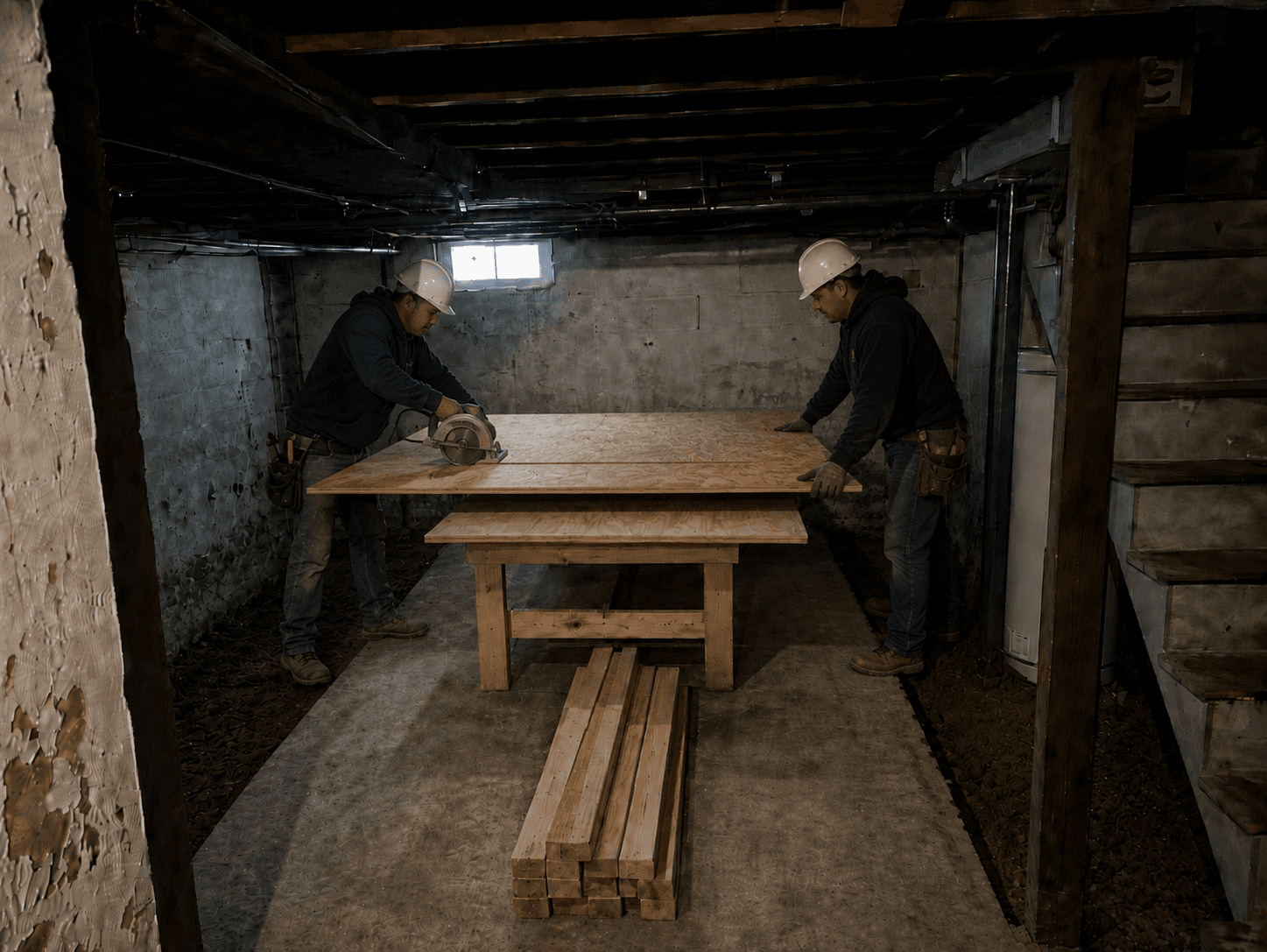
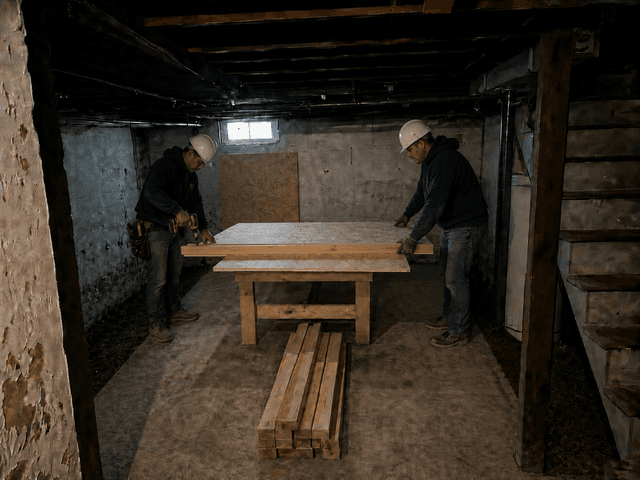
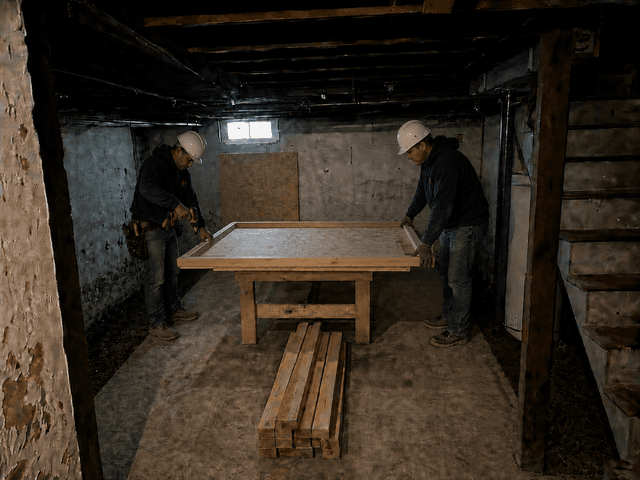
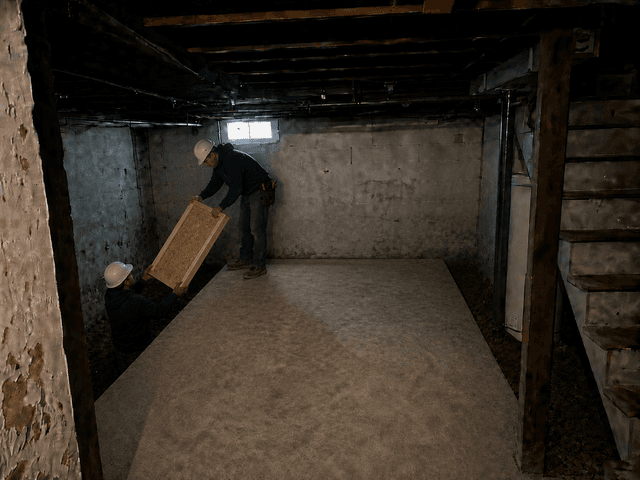
Formwork Prep & Installation
Plywood and 2x4 lumber are cut to size and assembled into formwork that will shape the new concrete underpinning section. Forms are installed tight against the excavated soil and existing footing.
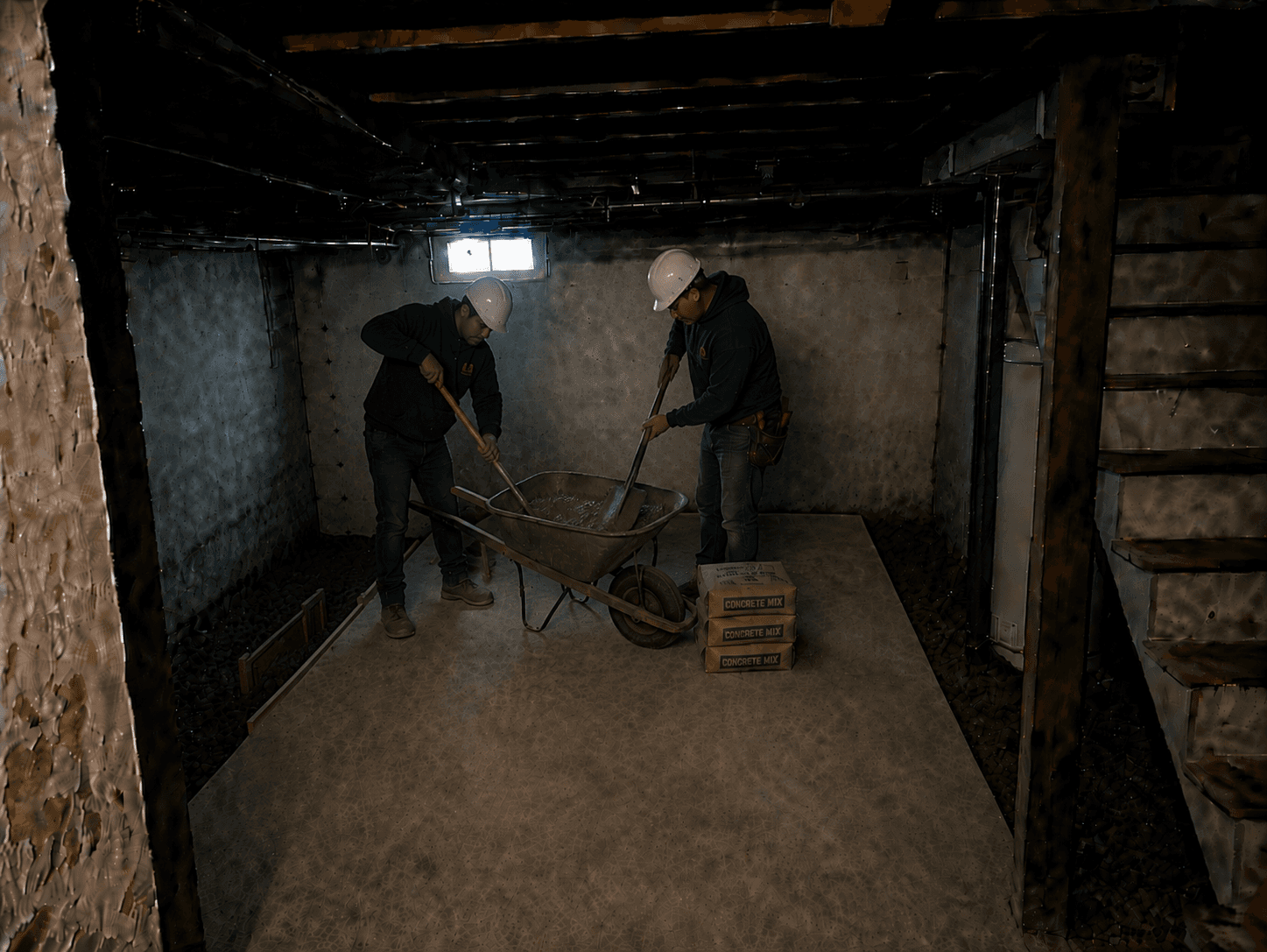
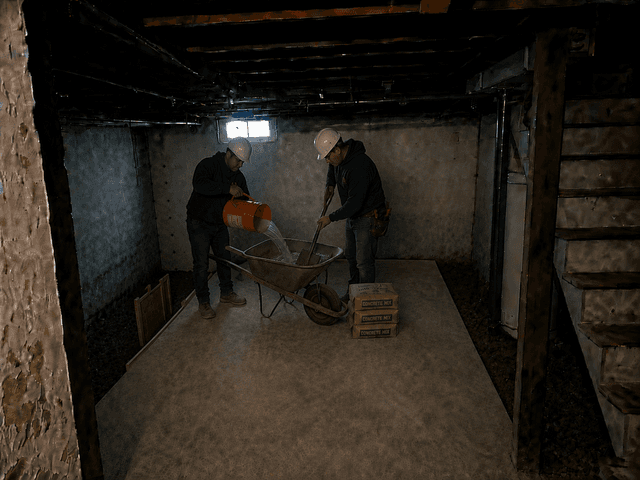
Concrete Mixing & Placing
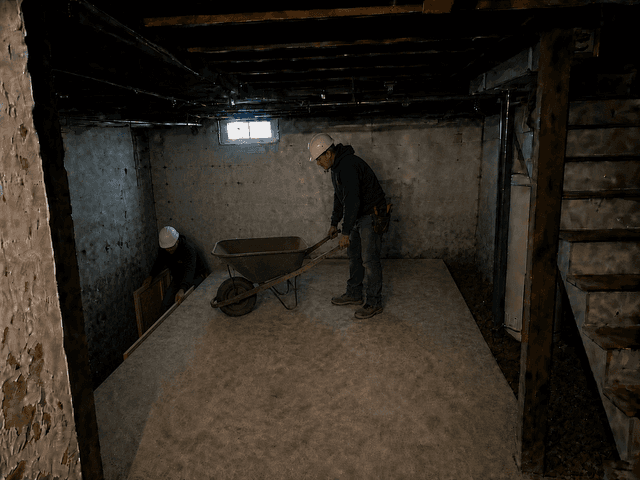
Concrete is mixed on-site or delivered from a plant. It's placed into the formwork in lifts, vibrated to remove air pockets, and screeded level. Each section must cure before the adjacent one is excavated.
Typical cure time between sections is 48–72 hours, depending on mix design and temperature.
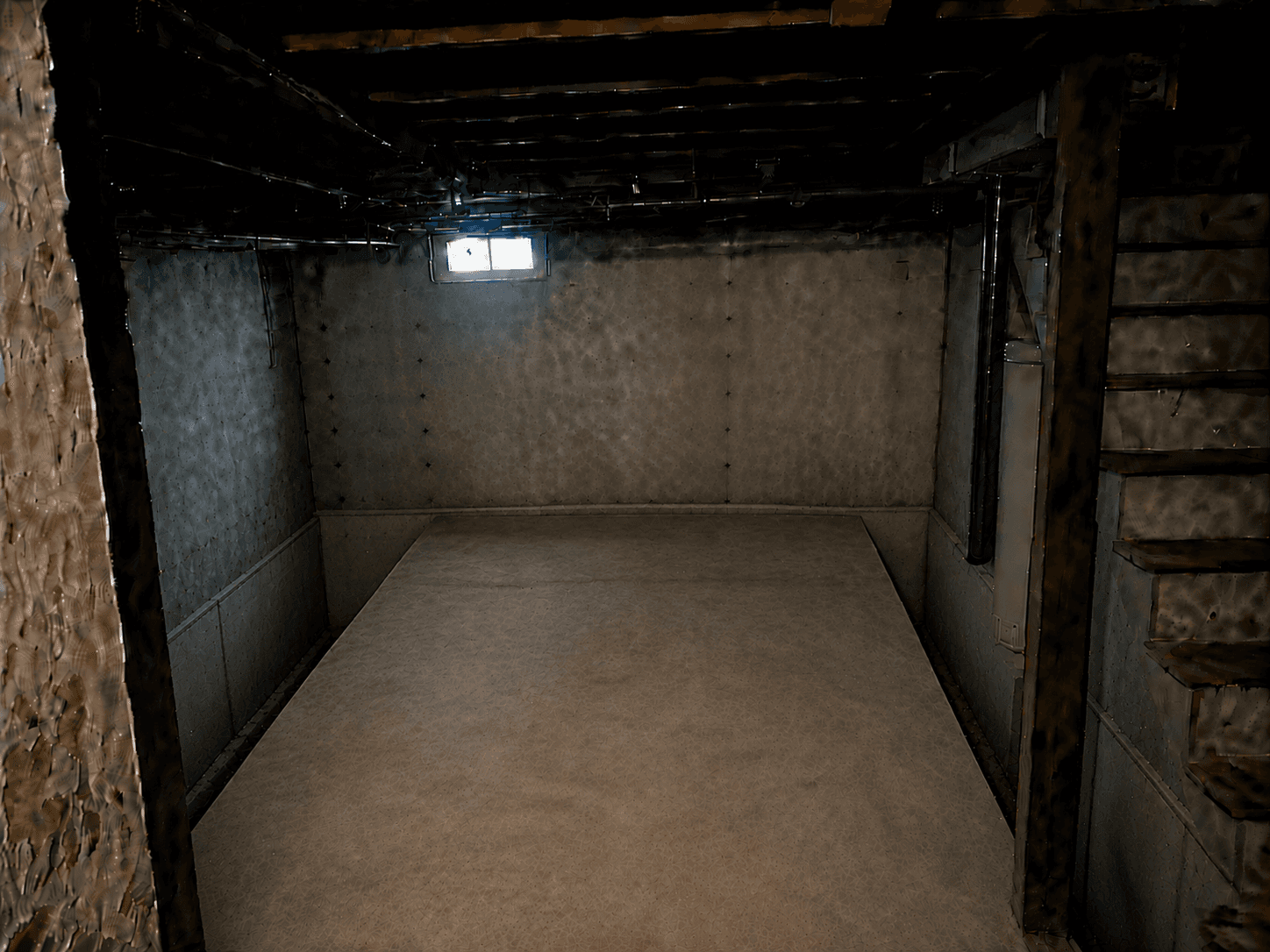
Underpinning Complete
All sections have been poured and cured. The foundation now extends to the new, deeper elevation. The basement has full headroom, and the walls are solid new concrete.
Phase 4 of 5
New Slab & Drainage
3 days slab removal, 2 days drainage, 2 days waterproofing and new slab. This wraps up the structural scope — in and out in 3 weeks for a typical Toronto house.
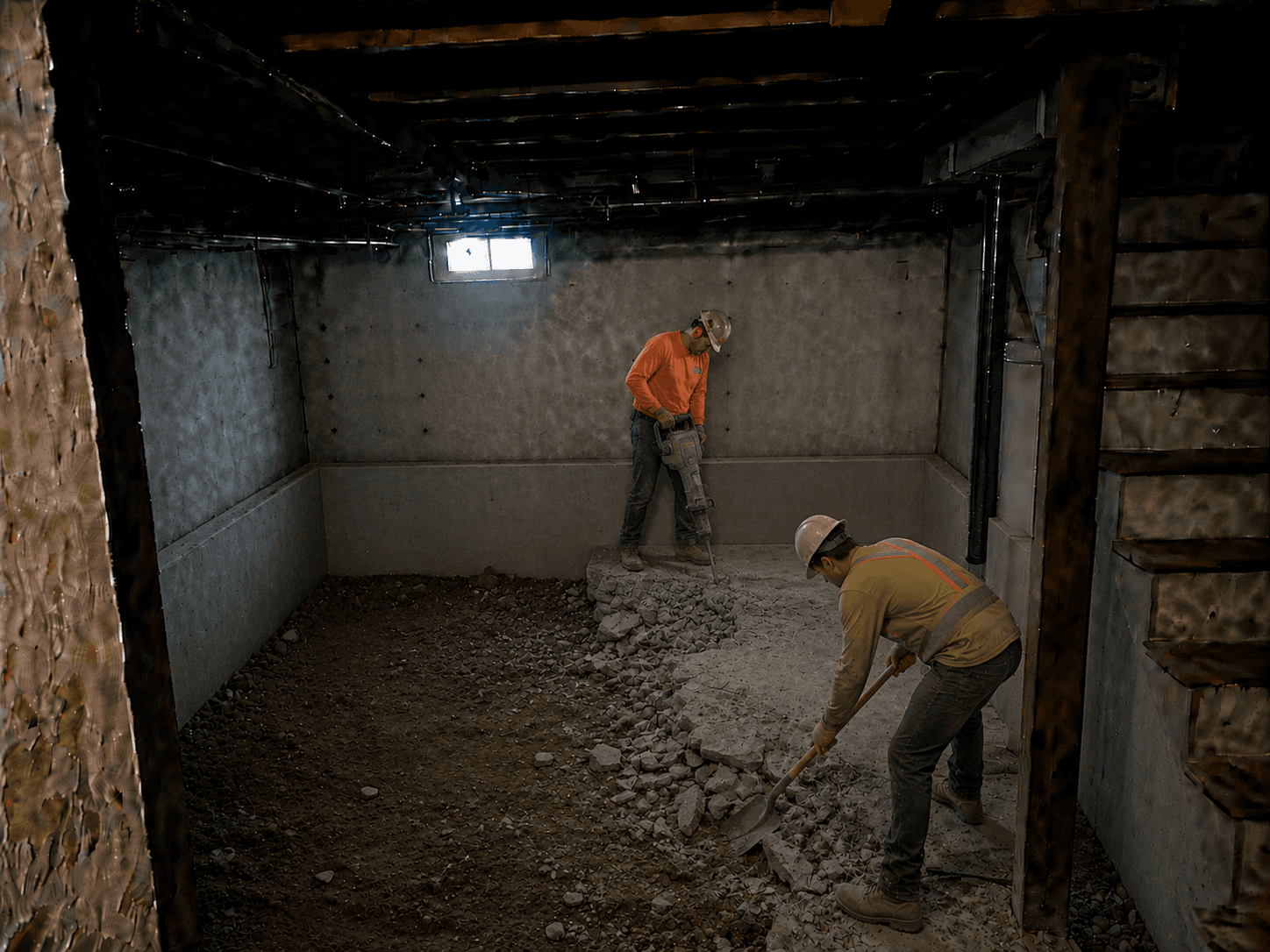
Old Slab Removal to Depth
The remaining original concrete floor slab is broken out and removed to the specified depth, making way for proper drainage, insulation, and a new engineered floor system.
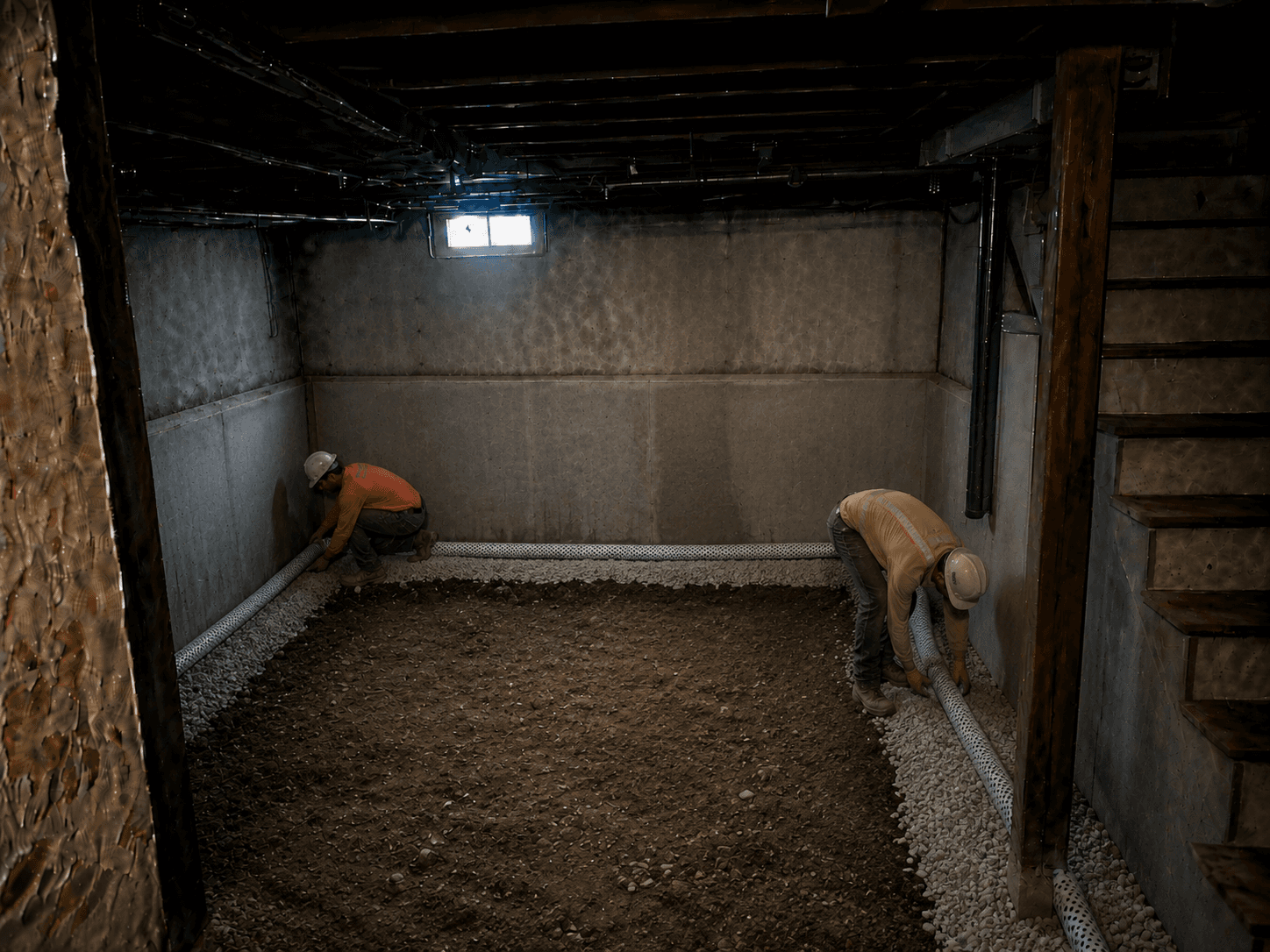
Perimeter Drain & Sump Pump
A new weeping tile (perimeter drain) system is installed around the inside of the foundation walls, sloped to a sump pit with a pump. This is the primary waterproofing defense.
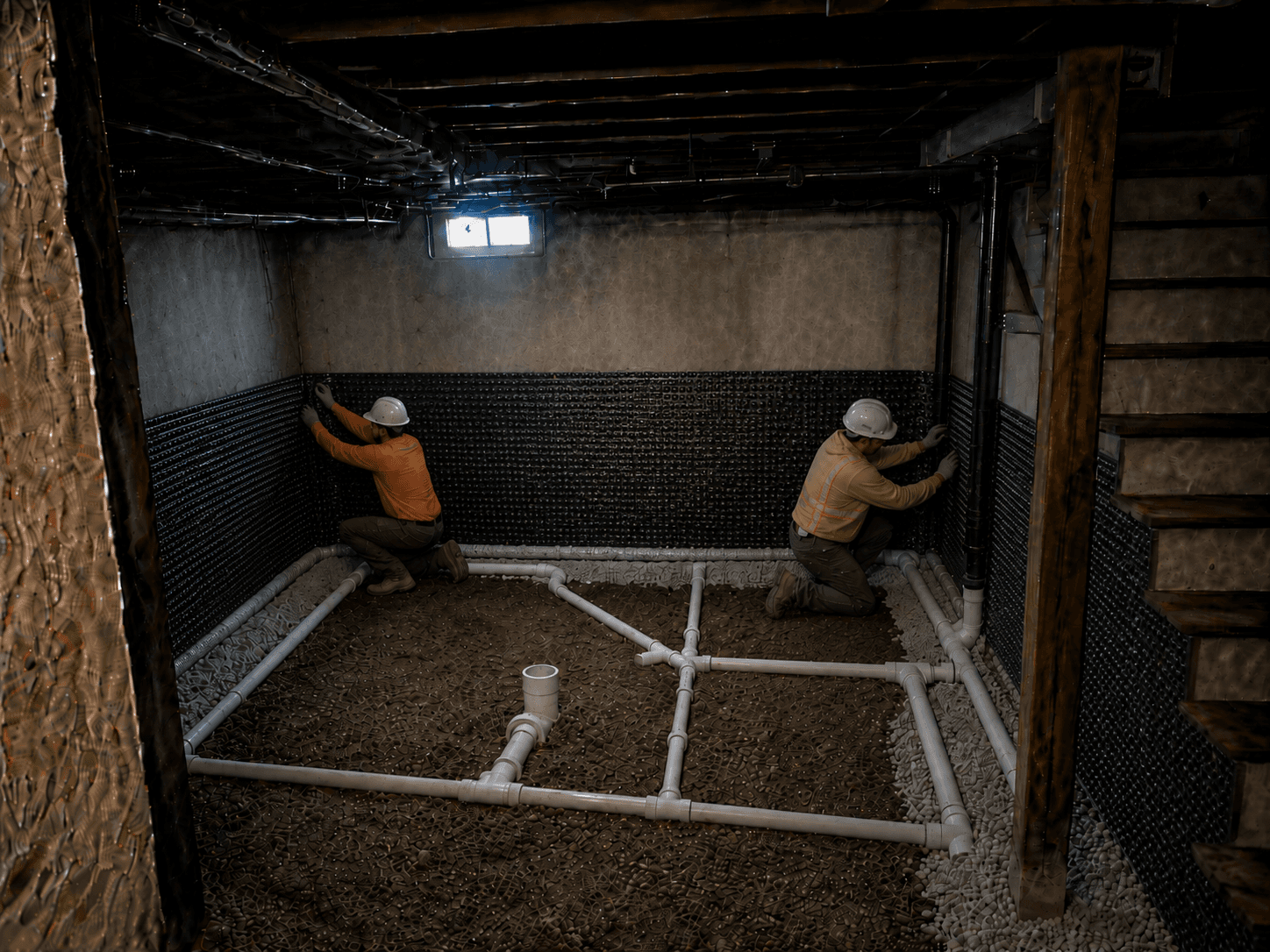
Drains & Dimpled Membrane
Drainage channels connect to the sump, and a dimpled membrane is applied to the foundation walls. The membrane creates an air gap that channels any residual moisture down to the drain.
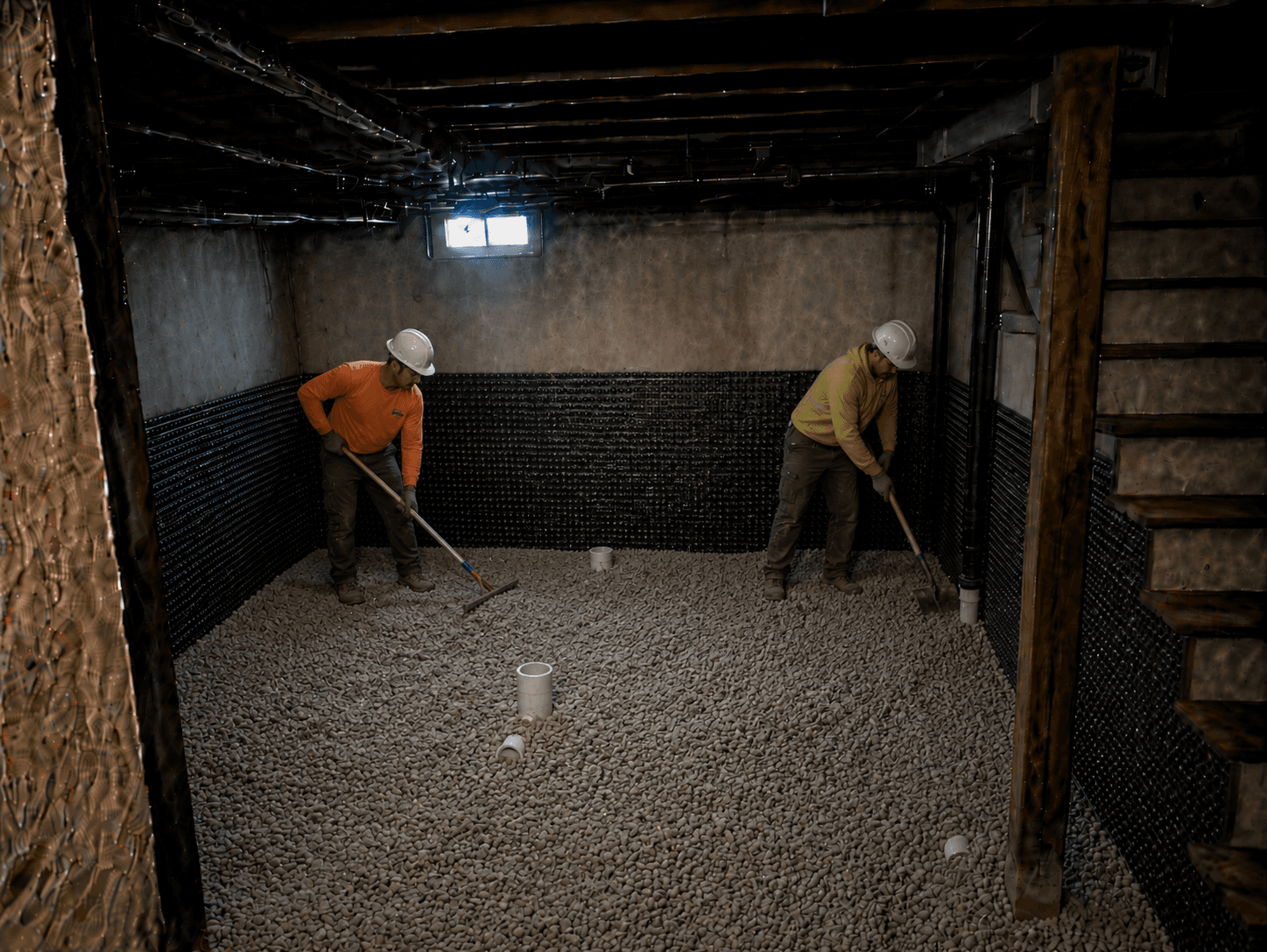
Gravel Base
Clean gravel is spread and compacted over the drainage system, providing a stable, free-draining base for the new floor slab.
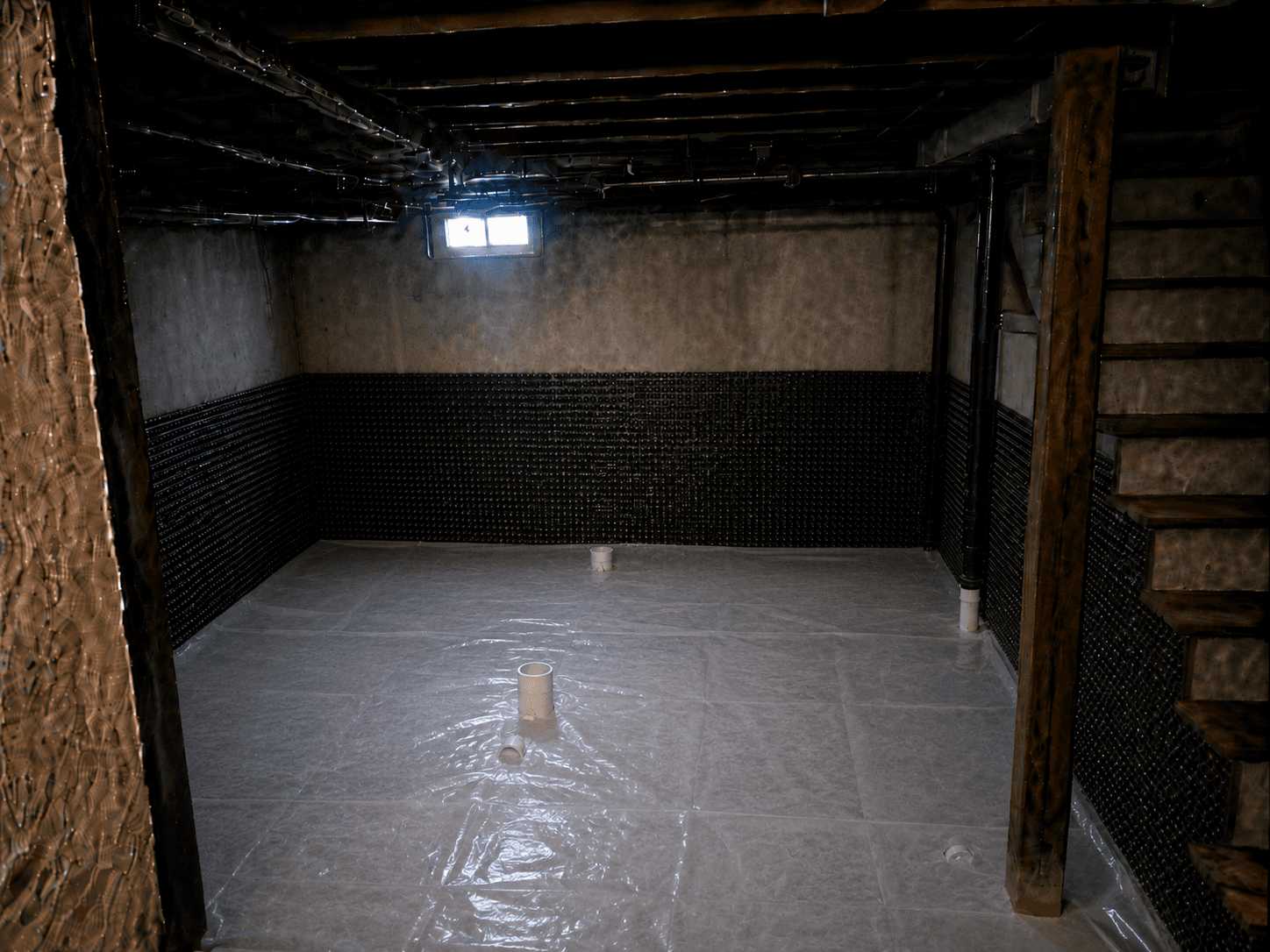
6 Mil Poly — Vapor & Radon
A 6 mil polyethylene sheet is laid over the gravel, sealing out moisture vapor and radon gas from the soil below. Seams are overlapped and taped.
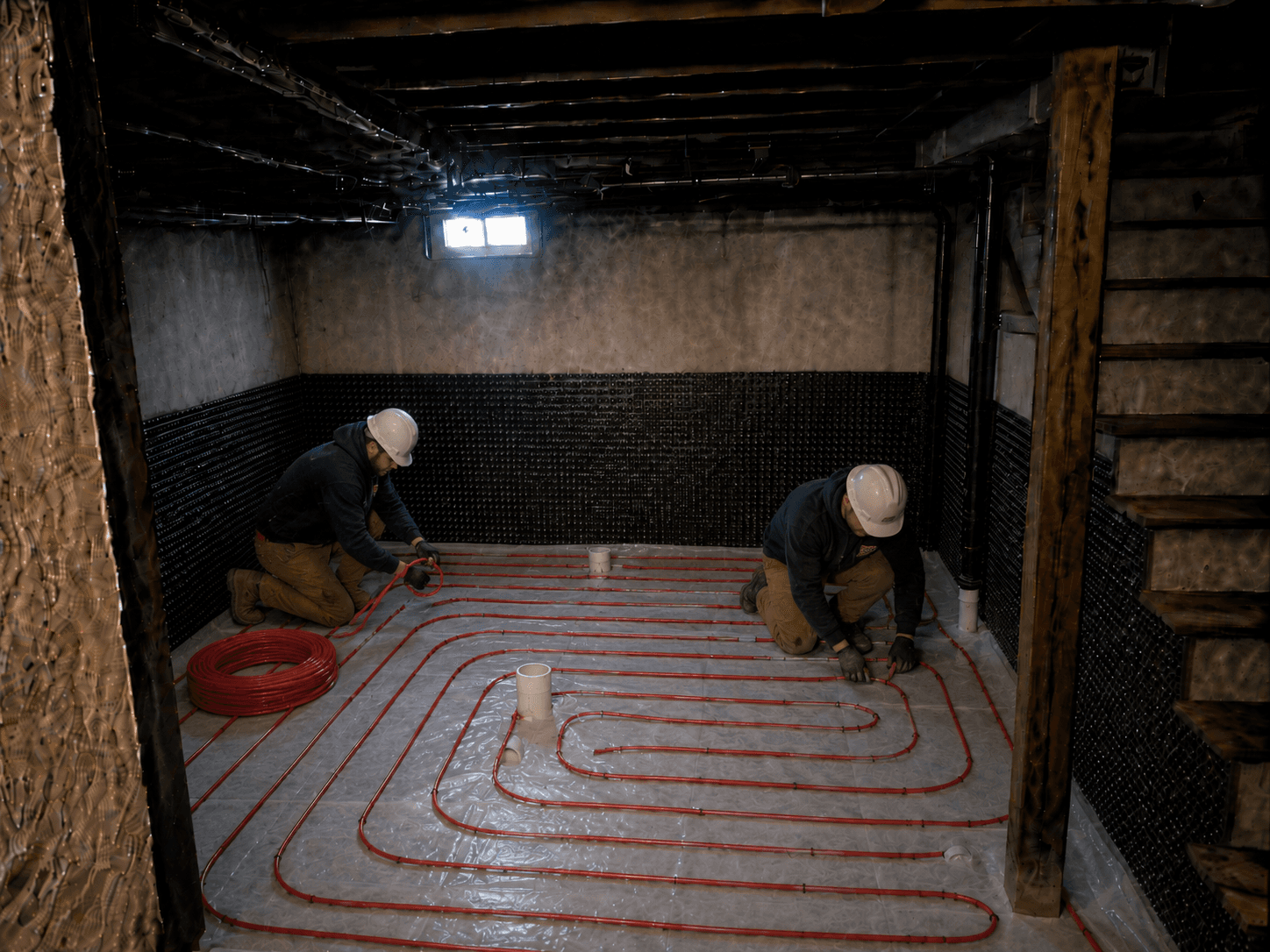
Heated Floor (In-Slab)
PEX tubing for in-floor radiant heating is laid out in a serpentine pattern on top of the vapor barrier. This will be embedded in the new concrete slab for efficient, comfortable heat.
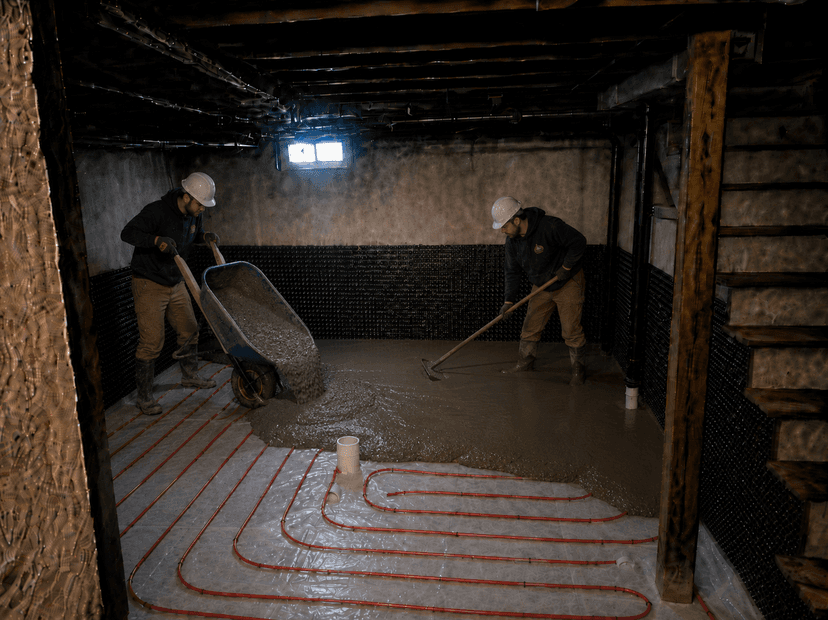
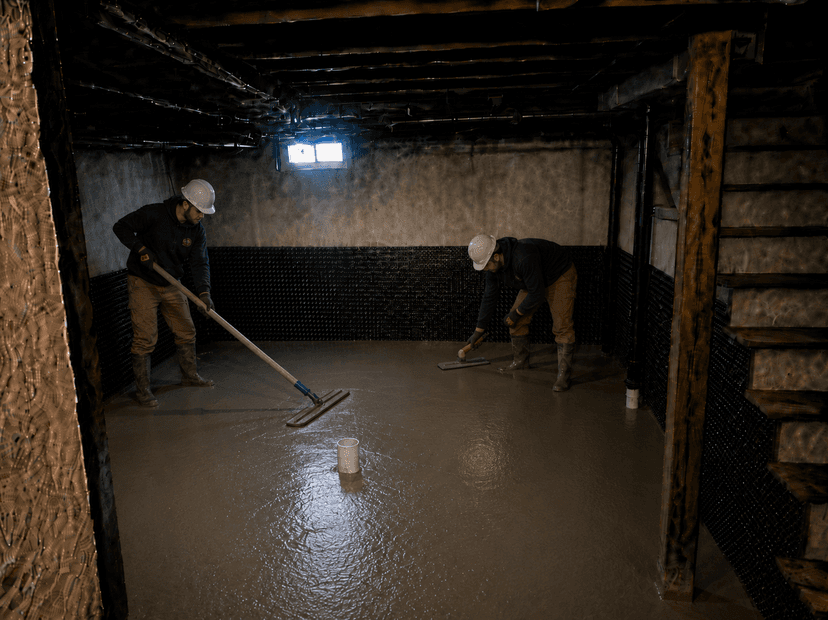
New Concrete Floor Slab
A new reinforced concrete floor slab is poured over the heated floor system. The surface is power-troweled to a smooth finish.
Phase 5 of 5
Finishing
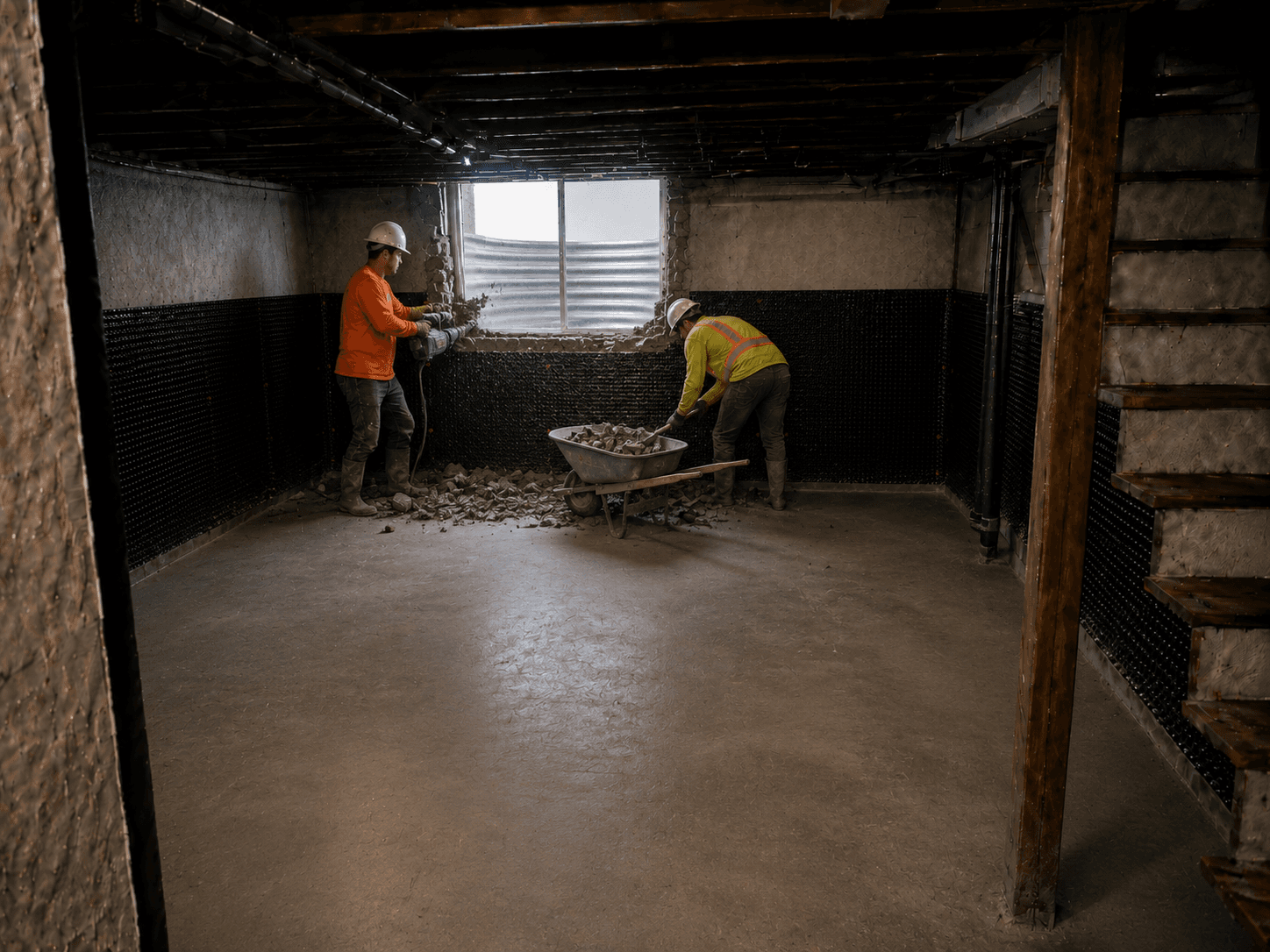
New Egress Window
A code-compliant egress window is cut into the foundation wall, providing natural light and a safe emergency exit. Required by building code for any basement bedroom.
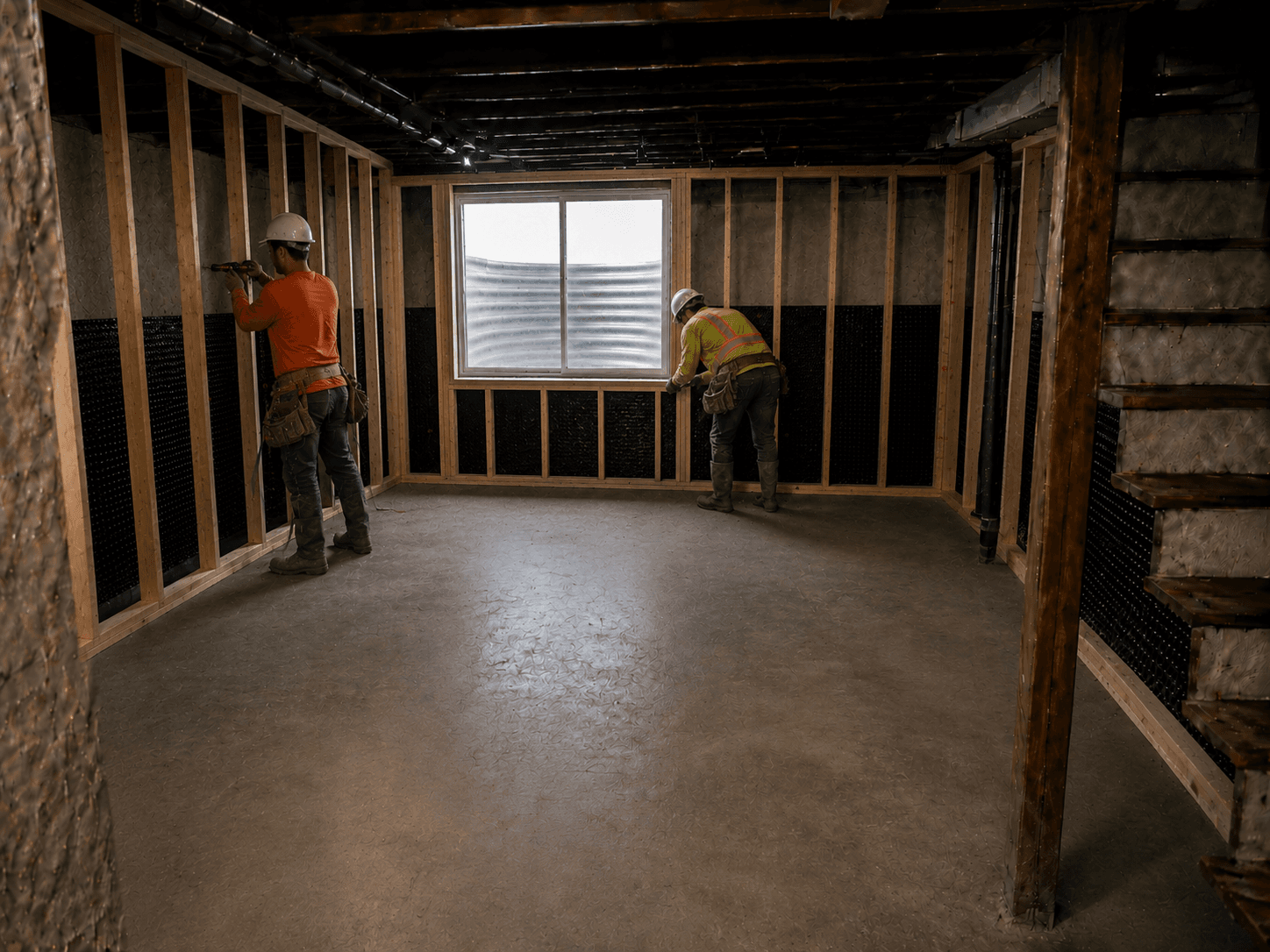
Wall Framing
Interior stud walls are framed against the foundation, creating the cavity for insulation and services (electrical, plumbing). Layout follows the approved floor plan.
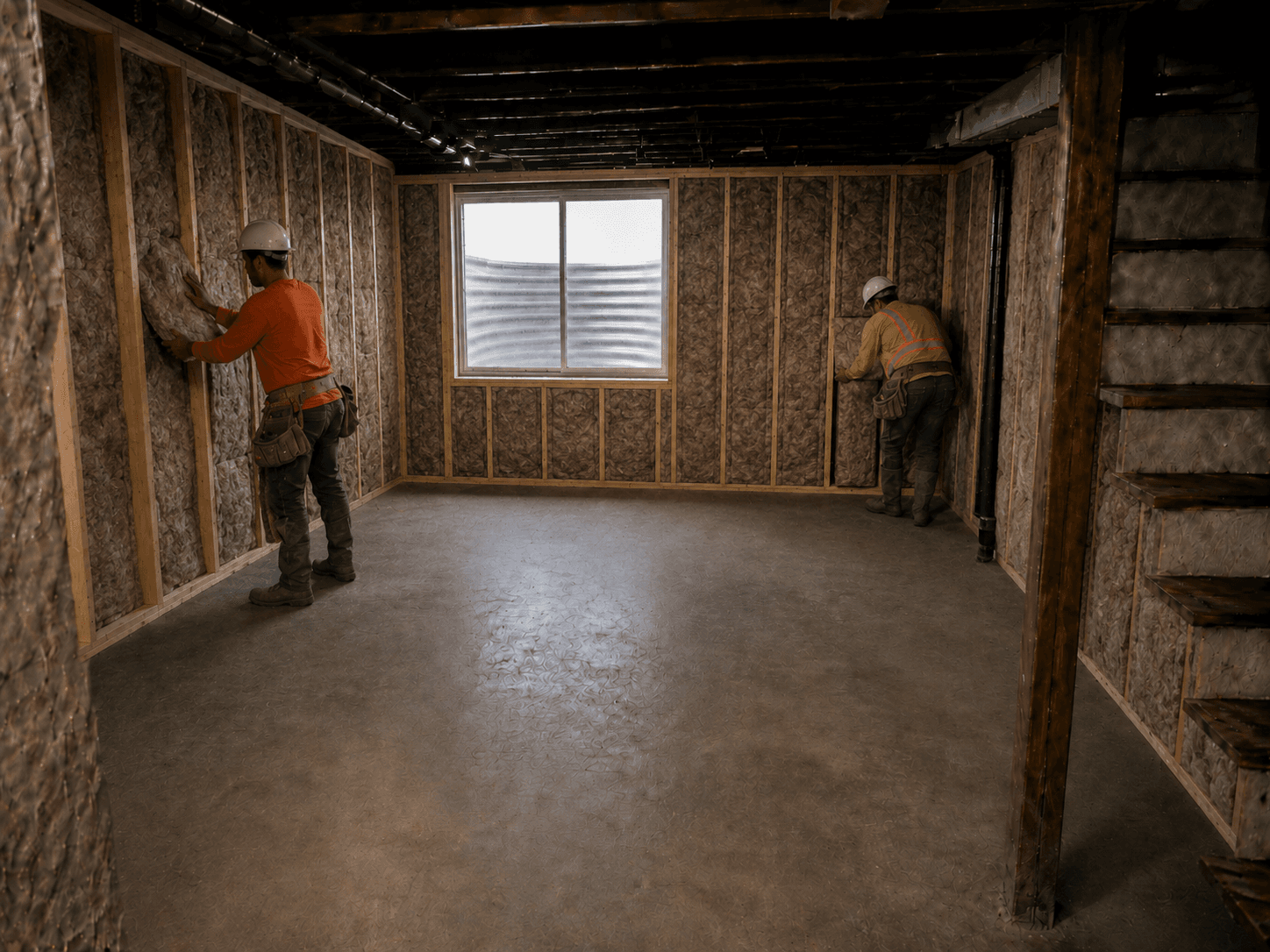
Insulation
Batt or spray-foam insulation fills the stud cavities, meeting Ontario Building Code R-values for below-grade walls. Proper insulation eliminates cold walls and condensation.
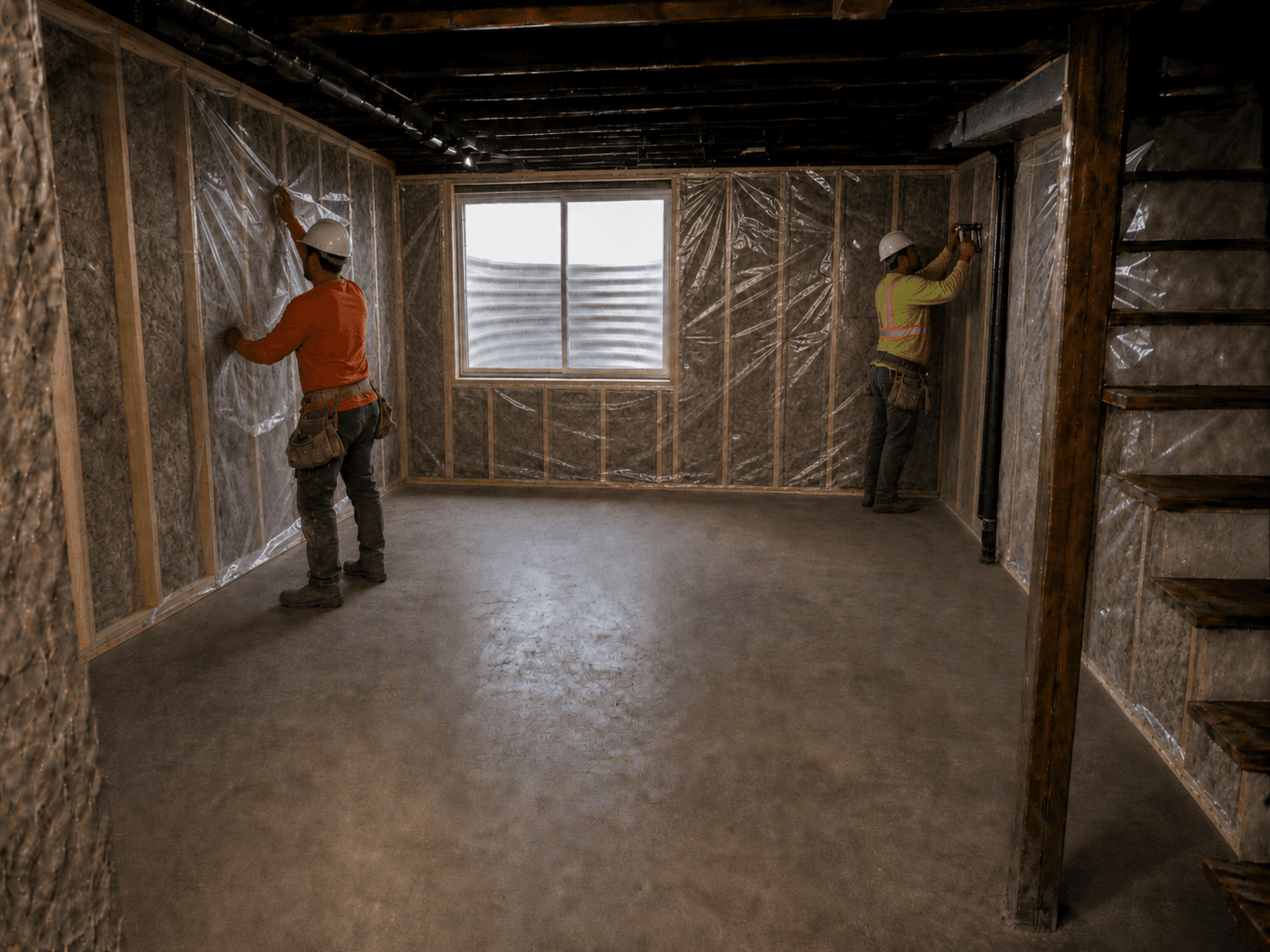
6 Mil Poly (Walls)
A continuous 6 mil poly vapor barrier is stapled over the insulated walls, preventing interior moisture from reaching the cold foundation surface.
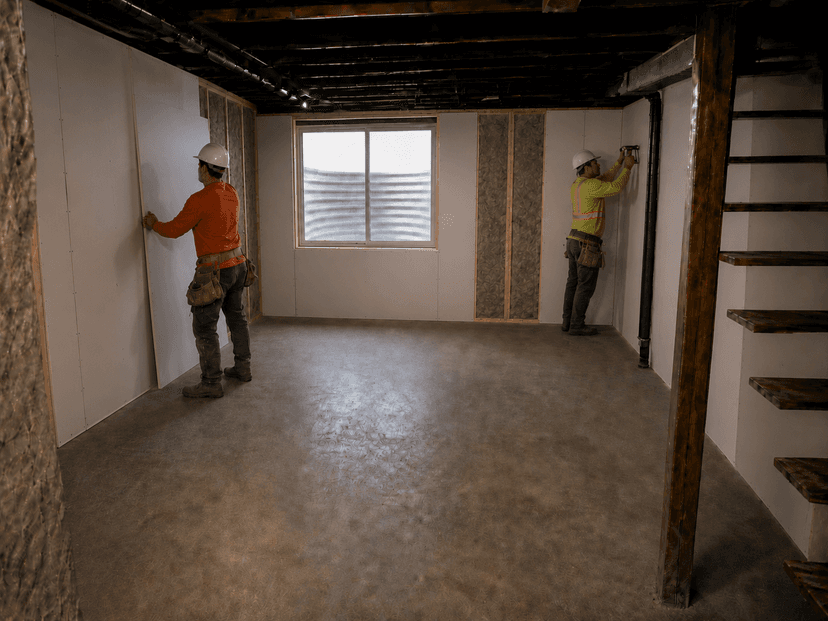
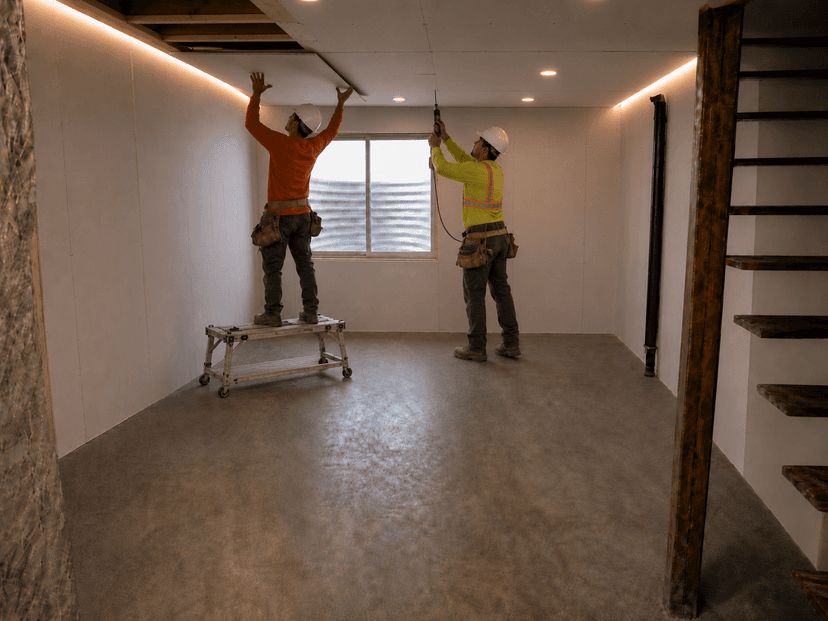
Drywall Installation
Drywall sheets are hung, taped, mudded, and sanded. The basement starts to look like a real room. Corners and joints are finished to a smooth Level 4 finish.
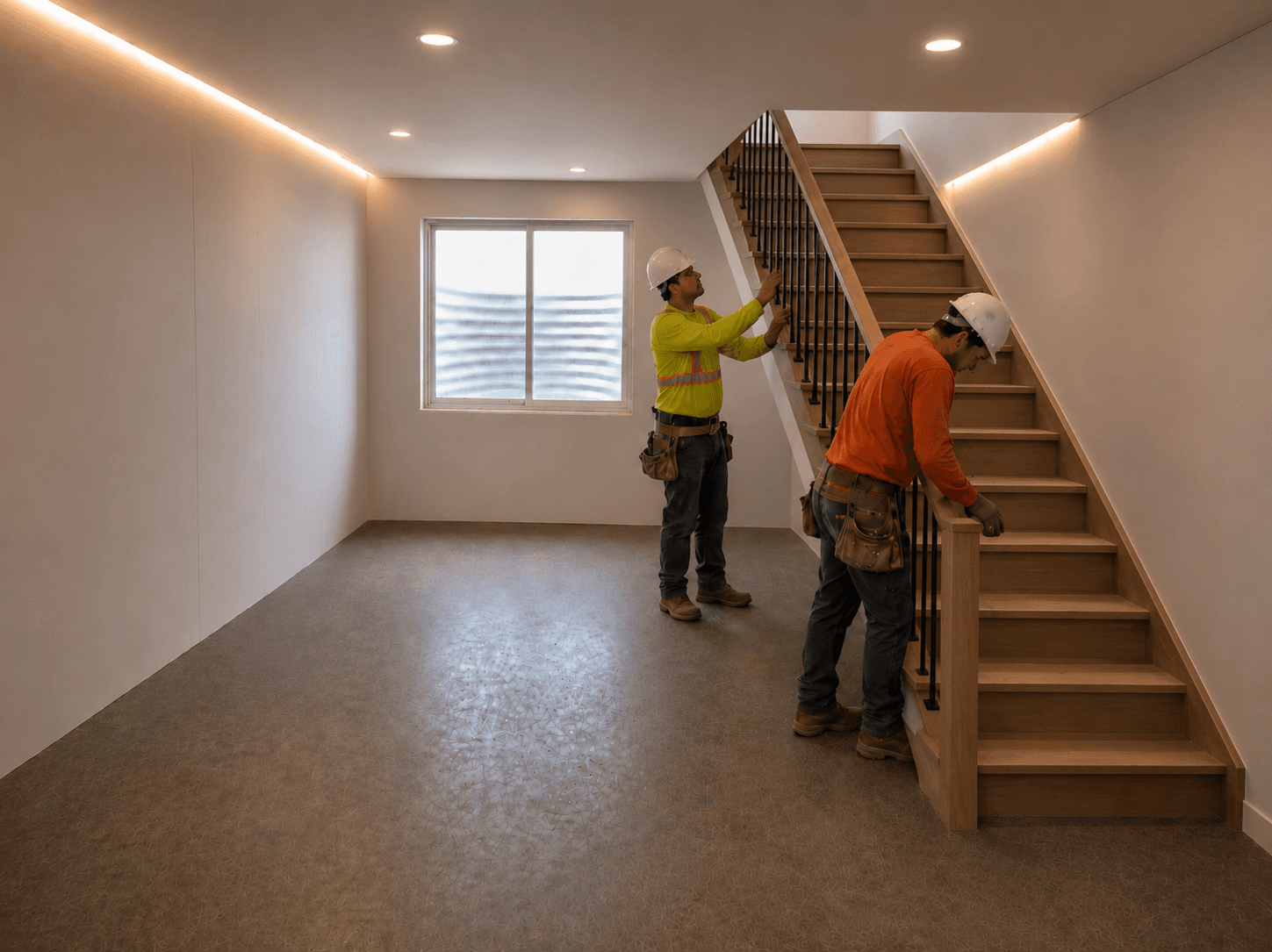
Staircase
The staircase is rebuilt or refinished to match the new floor elevation. With the lower floor, stairs get proper headroom and code-compliant dimensions.
Molding & Trim
Baseboards, door casings, and crown molding are installed — the details that make the space feel finished and polished.
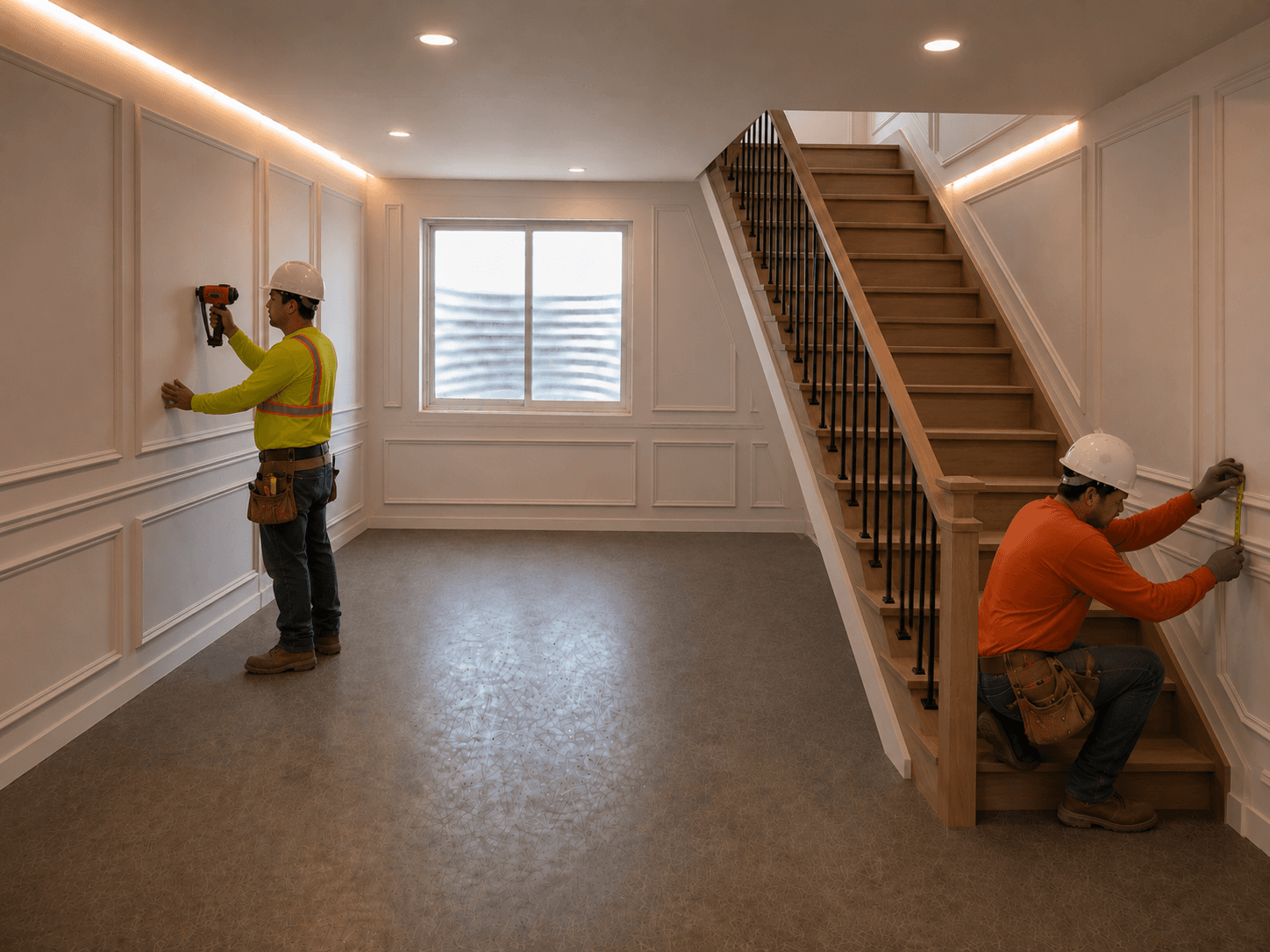
Paint
Walls and ceilings get a fresh coat of primer and two coats of finish paint. Light colors are common to maximize the feeling of space in a basement.
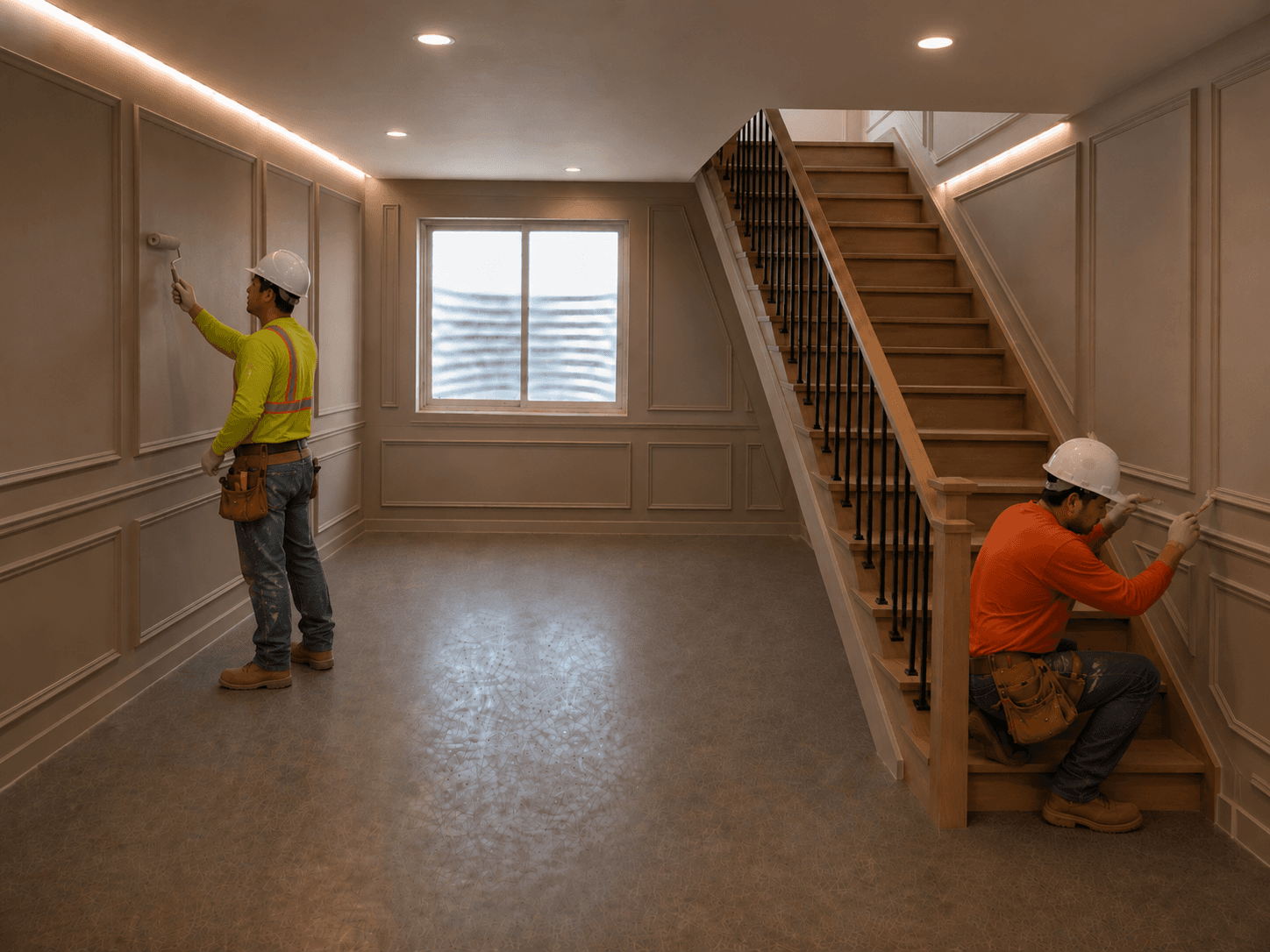
Accessories & Fixtures
Light fixtures, outlets, switches, and hardware are installed. The electrical panel is finalized and inspected.
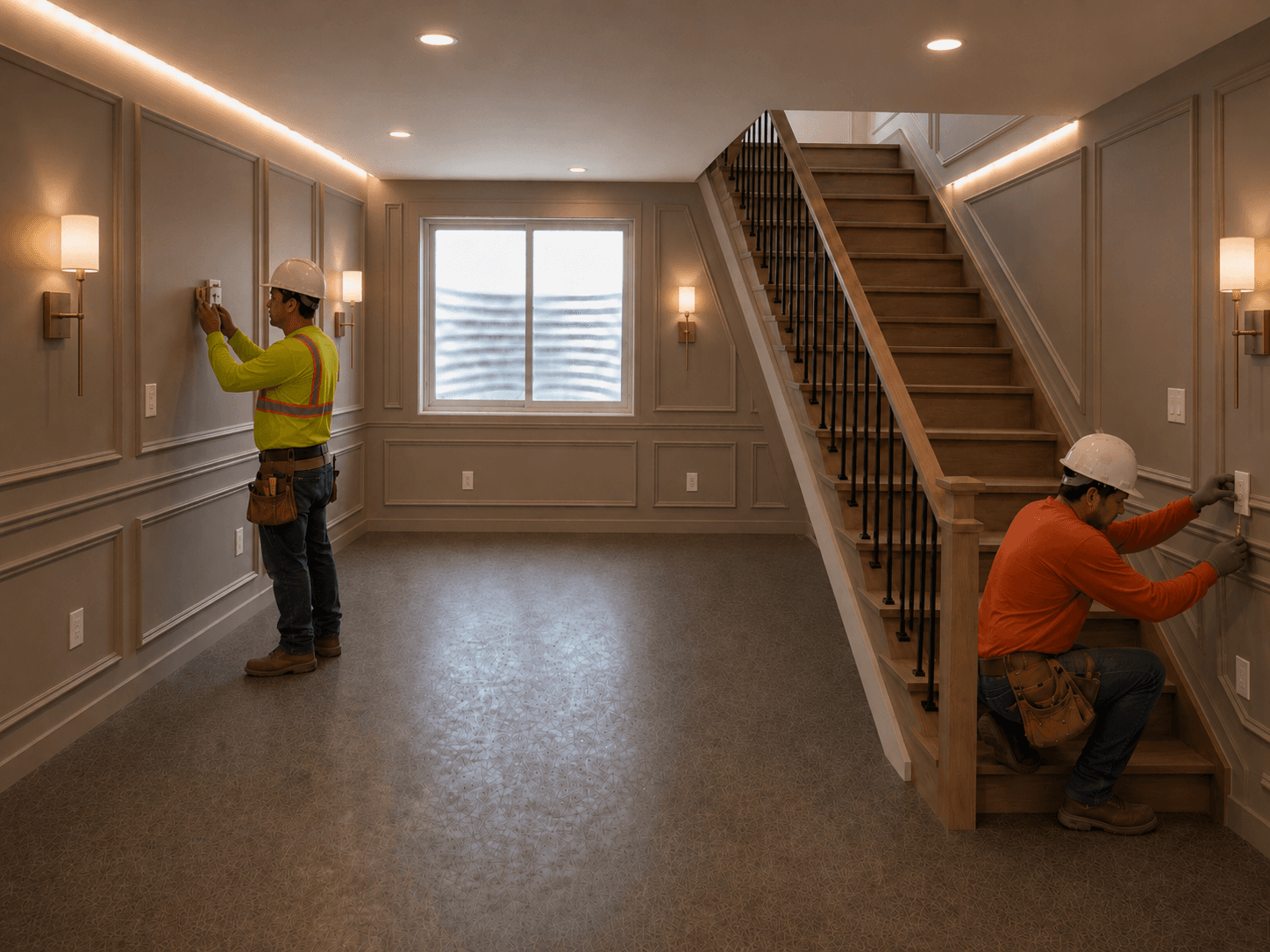
The Finished Space
From a dark, damp crawl space to a bright, warm living area with full ceiling height, radiant heat, egress windows, and a modern finish. This is the transformation that underpinning makes possible.

Frequently Asked Questions
How long does underpinning take for a typical Toronto house?
Why do you alternate underpinning sections instead of doing them in order?
How deep do you excavate for underpinning?
Do I need a permit for underpinning in Toronto?
What is the dimpled membrane for?
How much does underpinning cost in Toronto?
Can I live in the house during underpinning?
What are the 1200 mm sections?
Ready to Transform Your Basement?
One licensed crew handles your underpinning from permit to pour — with a live client app so you can follow every section. Free estimates, transparent pricing.
Planning a project in the city? See our complete underpinning Toronto guide — costs, permits, and neighbourhood-by-neighbourhood advice.