
Waterproofing
Water finds every crack, every porous seam, every failed joint. Hydrostatic pressure is 0.43 PSI per foot of depth — your basement floor sees 3-4 PSI pushing water through concrete. Dampproofing tar won't stop it. Rubberized membranes will.
Written by Pavel Vysotckii
BCIN-certified building designer & Quantity Surveyor · Updated June 2026
Project Overview
Fixed Milestone Pricing
You approve each stage before it's paid
14-Step Visual Guide
See every phase with 18 real photos
What is waterproofing?
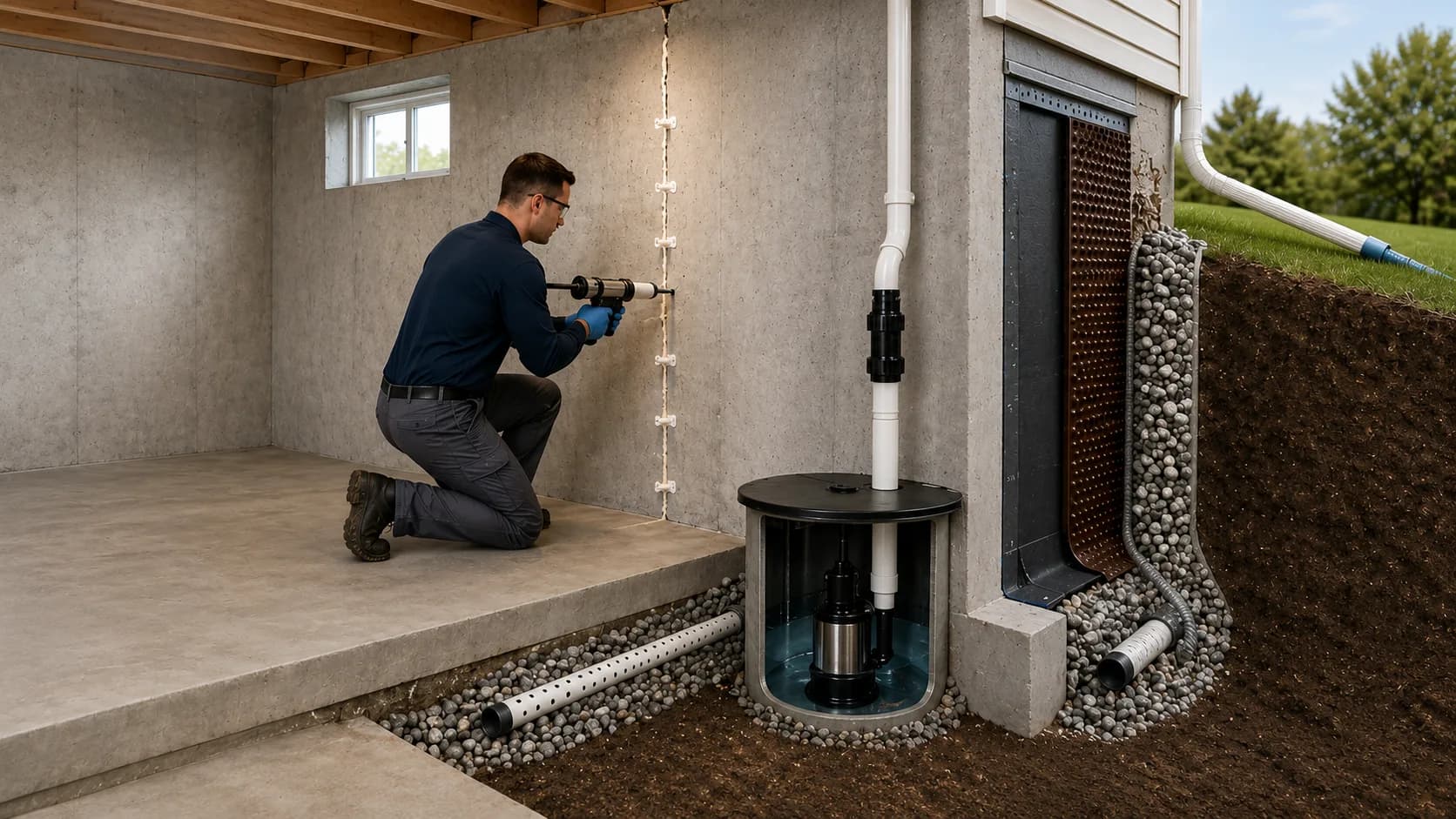
Waterproofing is a system that stops water from entering your basement by managing it at three stages: surface drainage (grading and gutters), subsurface drainage (weeping tile), and barrier protection (waterproof membranes on the foundation walls). Most people confuse waterproofing with dampproofing — they're not the same.
Dampproofing is the black tar spray you see on new foundation walls. It slows water vapor transmission but fails under hydrostatic pressure. Hydrostatic pressure is the force exerted by standing water — 0.43 PSI per foot of depth. If your water table sits 4 feet below grade, your basement floor sees 1.72 PSI of upward pressure. If the soil is saturated clay with poor drainage, the pressure can hit 3-4 PSI. Dampproofing tar cracks under that pressure; water migrates through the foundation into your basement.
True waterproofing uses rubberized or polymer-modified membranes that remain flexible and bond to the concrete. These membranes can handle 10-15 PSI of hydrostatic pressure without failure. They're applied to the exterior of the foundation (because that's where the water is) and tied into a weeping tile system that drains water away before pressure builds.
Weeping tile is perforated pipe laid at the base of the footing, sloped to drain toward a sump pit or daylight outlet (if your lot slopes). The pipe is surrounded by clear gravel (not sand or clay — those clog the perforations). Water seeps through the soil, hits the gravel, flows into the pipe, and drains away. Without weeping tile, water accumulates against the foundation and generates hydrostatic pressure.
Concrete is porous. Even 25 MPa concrete has microscopic capillaries that allow water vapor to migrate through the wall — this is called vapor drive. If the exterior face is wet and the interior face is dry (basement with dehumidifier), water vapor moves inward. Over years, this causes efflorescence (white mineral deposits), paint peeling, and mold growth. A waterproof membrane blocks vapor drive at the source.
When you need waterproofing
- Water pooling on basement floor after heavy rain or spring melt (indicates failed weeping tile, high water table, or cracks in the foundation)
- Efflorescence on foundation walls (white powdery deposits mean water is migrating through the concrete, dissolving salts, and evaporating on the interior surface)
- Musty smell or visible mold in the basement (moisture is present even if you don't see standing water — relative humidity above 60% supports mold growth)
- Cracks in foundation walls that leak during rain (vertical cracks from settlement, horizontal cracks from lateral pressure, or cold joints between pours)
- Finished basement with water damage (drywall staining, buckled flooring, or ruined furniture means water is getting in and you need exterior waterproofing to stop it)
- Buying an older home with no exterior waterproofing (pre-1960 homes often have clay weeping tile that has crushed or tree roots that have clogged the system)
- Adding a basement bathroom or bedroom (building code requires dry, habitable space — you can't legally finish a basement that floods)
Signs your basement has a water problem
Small warning signs often point to bigger drainage, foundation-crack, or moisture issues in GTA homes. If you notice any of these, it's worth booking a walkthrough before the damage spreads.

Water at the floor-wall joint
Often linked to hydrostatic pressure or failed drainage at the footing.

Vertical foundation cracks
Most vertical cracks can be injected, but widening or horizontal cracks may need a closer look.

Efflorescence / white staining
Mineral deposits can mean moisture is moving through the concrete or block.

Musty smell or damp air
Persistent humidity may point to hidden seepage and can contribute to mold growth.

Peeling paint or damp drywall
Finished basements often hide water damage until it spreads and becomes costly to repair.

Sump pump running often
Frequent cycling can signal high groundwater, a drainage issue, or a failing check valve.
Not sure what's causing it?
Book a walkthrough and get a clear written recommendation before the problem gets worse.
- On-site walkthrough
- Clear written recommendations
- No-pressure estimate
Real Waterproofing Work
Photos from our own GTA projects — the same daily photo record you get in the client app.
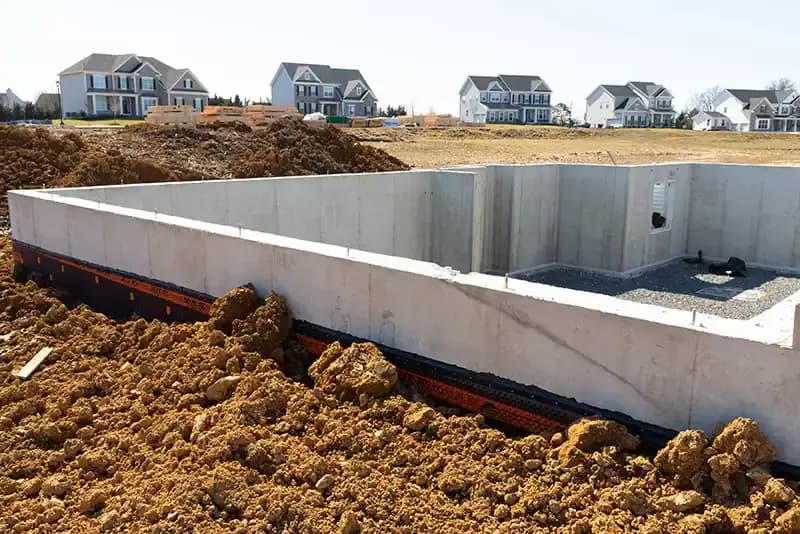
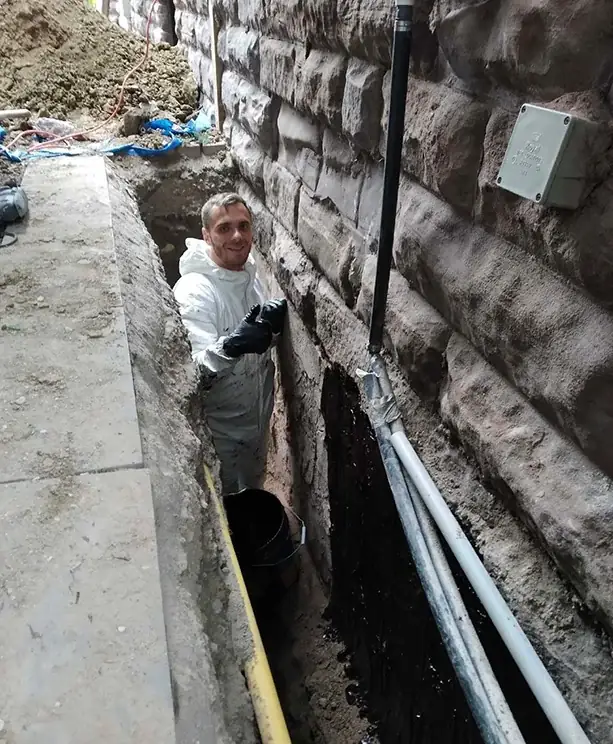
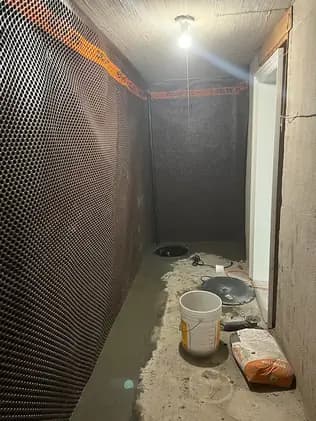
Real basement problems, real solutions
Every home is different, but the goal is always the same: find the source and protect your basement for the long term.
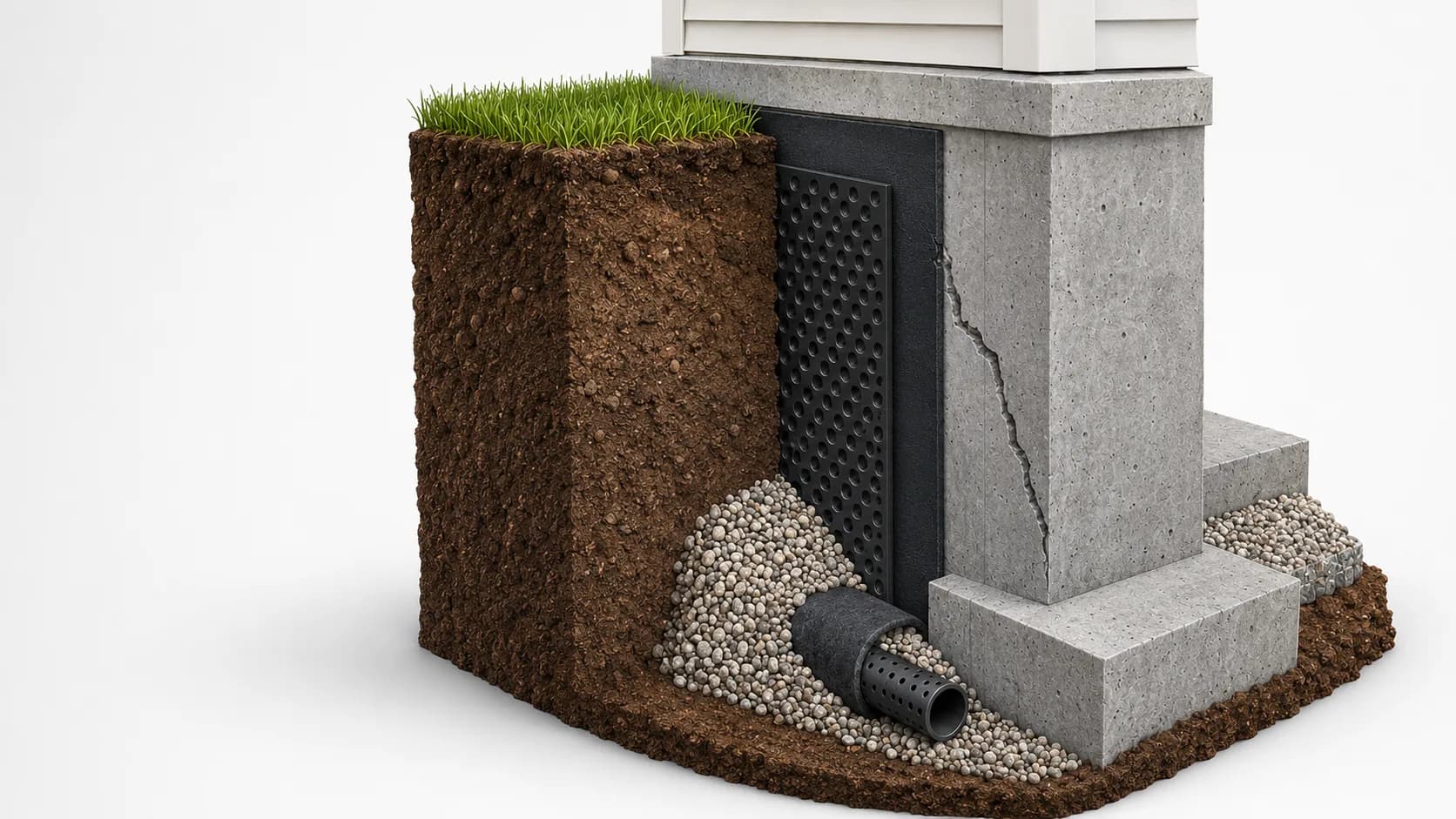

Exterior foundation waterproofing
- Problem
- Water entering through foundation walls from saturated soil and failed exterior coating.
- What's completed
- Excavation, waterproofing membrane, dimple board, footing drain, and backfill.
- Best for
- Chronic wall seepage, high water exposure, or no existing exterior waterproofing.
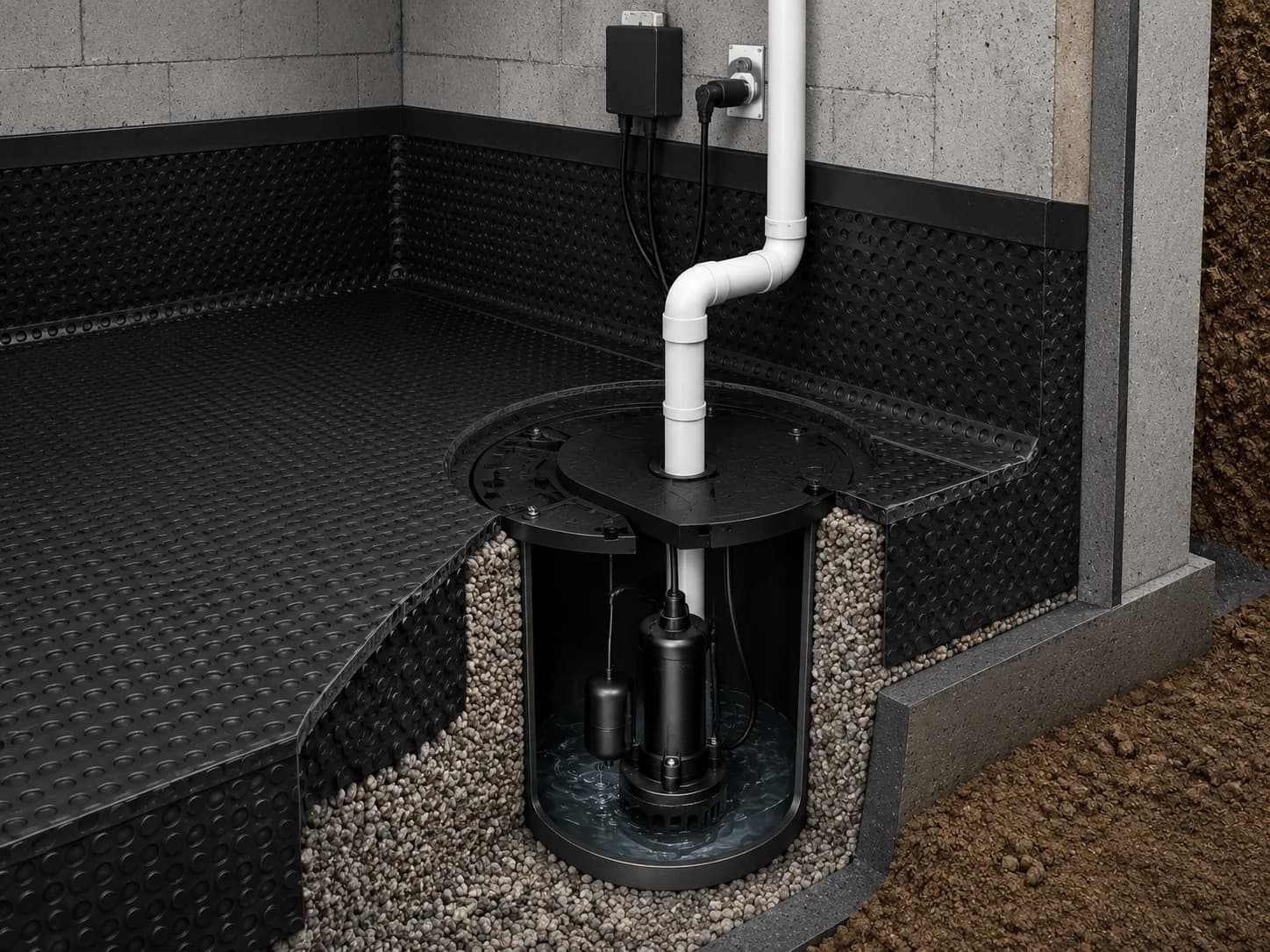

Interior drainage & sump pump
- Problem
- Water at the floor-wall joint or cove joint, recurring seepage, and hydrostatic pressure under the slab.
- What's completed
- Interior perimeter drainage, sealed sump basin, and pump discharge correction.
- Best for
- Floor-level water entry, recurring basement flooding, or high water-table areas.

Sump pump replacement & backup
- Problem
- Old or failing pump, power-outage risk, high water table, or a pre-renovation upgrade.
- What's completed
- New pump, check valve, battery backup, sealed-lid option, and discharge correction.
- Best for
- Aging sump pumps, storm protection, or homes without a battery backup system.
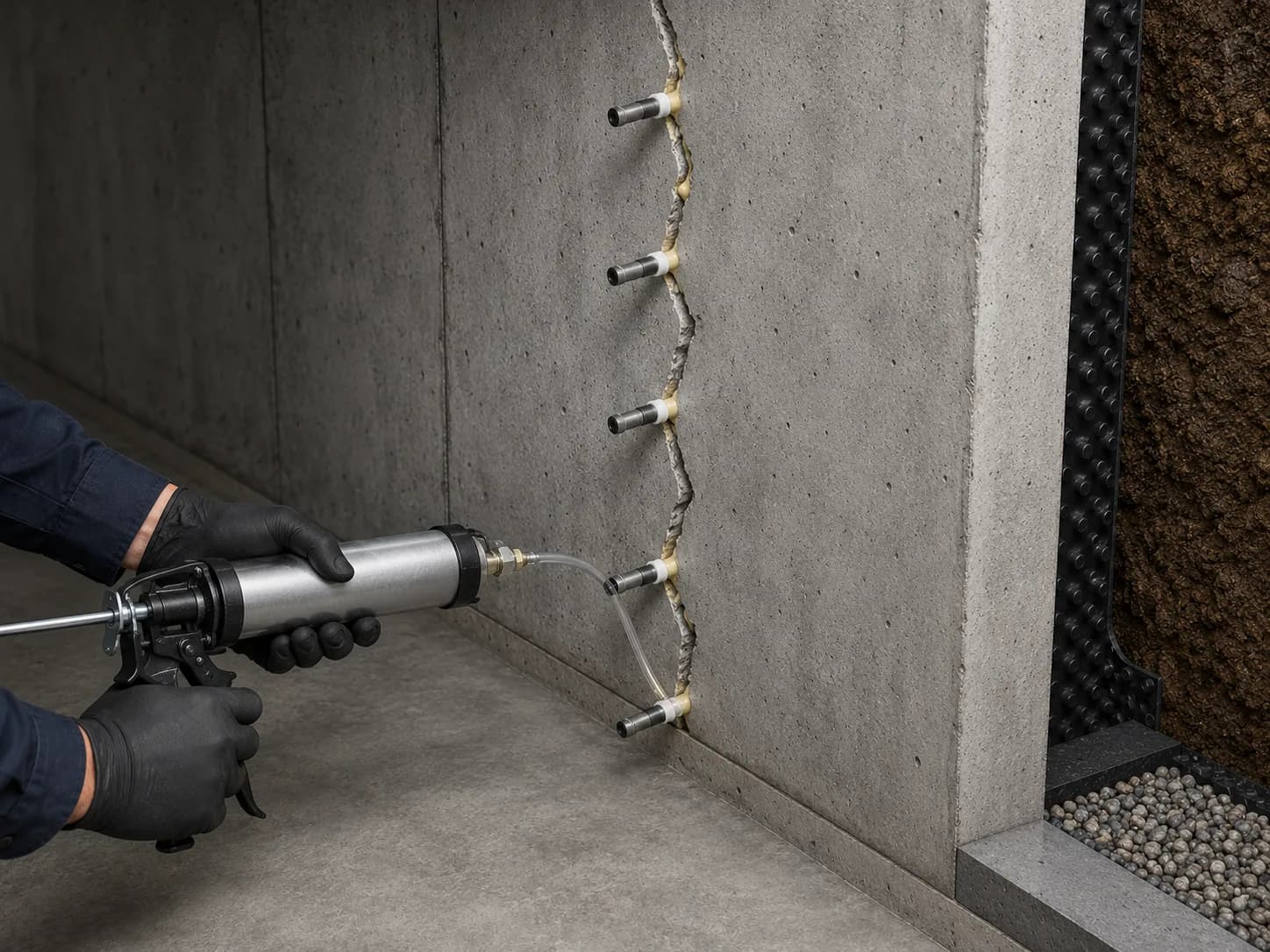

Foundation crack injection
- Problem
- A vertical or diagonal foundation wall crack leaking water into the basement.
- What's completed
- Polyurethane injection for most leaks, epoxy for structural cracks, and interior crack sealing.
- Best for
- Water entering through a visible wall crack in a poured-concrete foundation.

Drainage correction
- Problem
- Water pooling near the foundation from poor grading, downspout discharge, or failed weeping tile.
- What's completed
- Grading correction, downspout extensions, weeping-tile replacement, or surface drainage.
- Best for
- Standing water near walls, failed weeping tile, or inadequate surface drainage.

Interior foundation waterproofing
- Problem
- Moisture seeping through basement walls causing efflorescence, damp drywall, or mold concerns.
- What's completed
- Interior membrane application, vapor barrier, wall drainage channels, and dehumidification.
- Best for
- Block or stone foundations, damp walls without active leaks, or pre-finishing waterproofing.
The Process
What happens from start to finish
Excavation to footing depth
1-2 days per wallDig a trench along the exterior foundation wall, 3-4 feet wide and down to the bottom of the footing (typically 6-8 feet below grade). In Toronto clay, this is usually stable enough to excavate without shoring, but sandy soil or deep excavations (8+ feet) require trench boxes or sloped banks to prevent collapse. You MUST locate underground utilities (gas, water, electrical, telecom) before digging — call Ontario One Call at least 5 days before starting.
Foundation cleaning and crack repair
0.5-1 dayPressure-wash the foundation to remove dirt, old tar, and loose concrete. Inspect for cracks and patch them with hydraulic cement or polyurethane injection (flexible sealant that moves with the crack). Concrete surfaces must be clean and dry before membrane application — water or oil contamination prevents the membrane from bonding.
Membrane application
1 day per wallRoll or spray a rubberized waterproofing membrane onto the foundation wall, from footing to grade. Common products: Blueskin, Bituthene, or liquid-applied membranes like Tremco or SealBoss. The membrane must overlap seams by 3-4 inches and seal around penetrations (sewer pipes, electrical conduits). Thickness: 60-80 mils for most residential applications. Thicker membranes (120+ mils) are used below-grade in high-water-table areas.
Weeping tile installation
0.5-1 day per wallLay 4-inch perforated Big-O pipe (or rigid PVC with holes) at the base of the footing, sloped 1/4 inch per foot toward the sump pit or daylight outlet. Wrap the pipe in filter fabric (geotextile sock) to prevent silt from clogging the perforations. Surround the pipe with 12-18 inches of 3/4-inch clear gravel. Do NOT use limestone screenings, sand, or crusher dust — fine particles clog the system. The gravel acts as a drainage layer; water flows through it into the pipe.
Drainage board and backfill protection
1 dayInstall dimpled drainage board (e.g., Delta-MS, Tremco TremDrain) over the waterproofing membrane. The dimples create an air gap and drainage path; water that reaches the membrane can flow down to the weeping tile instead of sitting against the foundation. Backfill with gravel for the first 2-3 feet (maintains drainage), then switch to clay fill near grade (slopes water away from the house). Compact the fill in 12-inch lifts to avoid settlement.
Sump pump installation (if needed)
0.5 dayIf the weeping tile drains to an interior sump pit, install a 1/2 HP or 3/4 HP submersible pump with a check valve (prevents backflow) and a discharge line that runs to the street, storm sewer, or at least 10 feet from the foundation. The sump pit should be 18-24 inches deep with a gravel base for drainage. Many homeowners add a battery backup pump in case of power failure during storms.
Grading and surface drainage
0.5-1 daySlope the soil away from the foundation at 5-10% grade for the first 6-10 feet. Use the formula D = G × L to calculate the drop: for a 10-foot slope at 5% grade, that's 0.05 × 10 = 0.5 feet (6 inches of drop). Extend downspouts at least 6 feet from the house (or tie them into underground drainage pipes that discharge away from the foundation). For patios adjacent to the house, slope them 1-2% away from the foundation. Swales (shallow V-shaped ditches) along property edges channel heavy runoff at 1-10% slope. Surface water is often the biggest contributor to basement moisture — fixing grading costs $1,000-$3,000 and often solves 80% of the problem, but most people skip it because it's not glamorous.
Investment Guide
Waterproofing is priced per linear foot of foundation wall or as a lump sum for full-perimeter jobs. Exterior waterproofing is 2-3x more expensive than interior systems, but it's also 5-10x more effective because it stops water before it enters the foundation.
Exterior waterproofing (one wall, 20-30 ft)
$5,000-$12,000
Depends on: Includes excavation to footing depth, membrane application, weeping tile, drainage board, and backfill. Price depends on depth (deeper excavations cost more), access (tight side yards require hand-digging), and soil conditions (rocky soil is slower to dig).
Full-perimeter exterior waterproofing
$18,000-$40,000
Depends on: For a typical Toronto semi (80-100 linear feet of foundation). Includes all four walls, weeping tile around the entire perimeter, sump pump installation, and grading. Jobs with deep foundations (8+ feet), poor access, or high water tables push toward the high end.
Interior waterproofing (drain tile + sump pump)
$5,000-$10,000
Depends on: Cut a trench in the basement floor perimeter, install weeping tile, pour new concrete, and add a sump pump. MUCH cheaper than exterior work, but it doesn't stop water from entering the foundation — it just collects it inside and pumps it out. The foundation stays wet, which accelerates deterioration.
Crack injection (epoxy or polyurethane)
$500-$1,500 per crack
Depends on: For active leaks through foundation cracks. Polyurethane is flexible and tolerates movement; epoxy is rigid and stronger. Injection is a temporary fix if the root cause (hydrostatic pressure, poor drainage) isn't addressed.
Sump pump replacement
$800-$2,000
Depends on: Includes 1/2 HP or 3/4 HP submersible pump, check valve, discharge piping, and labor. Battery backup systems add $600-$1,200.
What Affects the Price
Get a free waterproofing assessment with moisture testing, drainage analysis, and a detailed scope of work. RenoNext contractors explain WHY water is getting in and show you the fix — no scare tactics.
Get a ballpark estimate in under 2 minutes.
Permits & Building Code
Ontario Building Code requirements
| Permit / Approval | Authority | Typical Cost |
|---|---|---|
| Building Permit (sometimes required) | City of Toronto or local municipality | $0-$500 |
| Plumbing Permit (if installing sump pump) | City plumbing inspector | $150-$300 |
| Ontario One Call Utility Locate | Ontario One Call | Free (mandatory 5 days before digging) |
If your property is designated heritage, excavation near the foundation may require heritage approval. This can add 4-8 weeks to the timeline.
Some cities have tree bylaws that restrict excavation within the drip line of protected trees. Check before digging if you have large trees near the foundation.
Fixed Milestone Pricing, Approved by You
Every waterproofing project runs on fixed milestone pricing. The plan is signed before work starts, and you approve each stage before it's paid.
Plan Signed Before Work Starts
Every milestone and its price is written into the contract up front — no surprise extras.
Review in the Live App
Daily photos, inspection reports, and spend vs budget land in your client app at every phase.
You Approve Each Milestone
A stage is only paid after you review the work and sign off in the app.
Project Center
Waterproofing
Milestone Progress
Milestone 3 of 4
Waterproofing failures and why they happen
- Interior drain tile instead of exterior waterproofing: Interior systems are cheaper because you don't excavate outside — you cut a trench in the basement floor, install weeping tile, and pump the water out. The problem: water is STILL entering the foundation. The concrete stays saturated, which accelerates freeze-thaw damage, efflorescence, and rebar corrosion. Interior systems are a bandaid; exterior waterproofing is the cure.
- Using dampproofing tar instead of a waterproof membrane: Tar is sprayed on new foundations as a vapor barrier, but it can't handle hydrostatic pressure. Under 2-3 PSI, tar cracks and peels. Water migrates through the cracks into the basement. Rubberized membranes (60-80 mils thick) remain flexible and bonded under 10-15 PSI. If your quote mentions "tar waterproofing," that's dampproofing — not the same thing.
- Weeping tile without filter fabric: Big-O pipe has perforations that let water in. If you bury it directly in soil, silt and clay particles flow into the pipe and clog it within 5-10 years. Wrapping the pipe in geotextile filter fabric (or buying pre-wrapped pipe) blocks fine particles while allowing water to pass. Skipping the fabric saves $1-2 per linear foot and costs you a $15,000 re-excavation in a decade.
- Backfilling with clay directly against the membrane: Clay is impermeable — it traps water against the foundation instead of draining it to the weeping tile. The first 2-3 feet of backfill should be clear gravel to maintain a drainage path. Clay fill is fine near grade (to slope water away), but not at depth. Some contractors backfill entirely with clay to save money on gravel. This defeats the purpose of the membrane.
- Improper weeping tile slope: Weeping tile must slope at least 1/4 inch per foot toward the discharge point (sump pit or daylight outlet). If the pipe is level or slopes backward, water pools in the pipe and doesn't drain. Soil settlement can alter the slope over time, so some contractors use rigid PVC pipe (less likely to sag than flexible Big-O) or install cleanouts for future maintenance.
- Discharging sump pump too close to the foundation: If the discharge line empties 3-4 feet from the house, that water re-infiltrates the soil and flows back to the foundation. The sump pump runs constantly, fighting the same water over and over. Discharge lines should extend at least 10 feet from the foundation, or tie into the storm sewer if code allows.
- Skipping crack repair before membrane application: If you apply a waterproof membrane over an active crack, water still flows through the crack into the basement — the membrane is on the wrong side of the leak. Cracks must be injected with polyurethane or epoxy before membrane installation. Some contractors skip this to save time; the membrane looks good but doesn't stop the leak.
- No surface drainage improvements: Waterproofing the foundation is pointless if your gutters dump water 2 feet from the house or your yard slopes toward the foundation. Surface water is the #1 cause of basement moisture. Extending downspouts, re-grading the yard, and adding swales costs $1,000-$3,000 and often solves 80% of the problem — but most homeowners ignore it because it's not glamorous.
Trusted by Ontario Homeowners
One licensed crew and a live client app on every waterproofing project
Licensed
OBC Licensed, Insured & WSIB Covered
Live App
Daily Photos & Inspection Reports
Fixed Price
Milestones You Approve
Related Services
Foundation Repair
Foundation cracks often cause water intrusion. Many waterproofing jobs include crack repair with epoxy or polyurethane injection.
Learn moreUnderpinning
If you're underpinning to add basement height, that's the perfect time to install exterior waterproofing since the foundation is already exposed.
Learn moreWe monitor your sump pump 24/7 — long after the job is done
A connected sensor in your sump pit watches the water level and your pump around the clock, alerting you to high water, pump failure, or power loss before a wet basement happens.
Common Questions
Is interior waterproofing good enough, or do I need exterior?
How long does a waterproofing membrane last?
Can I waterproof just one wall, or do I need the whole perimeter?
What's the difference between Big-O pipe and rigid PVC weeping tile?
Why does my basement still smell musty after waterproofing?
Do I need to waterproof if I have a sump pump?
Can I DIY waterproofing to save money?
What if I have a high water table? Will waterproofing work?
Should I waterproof before or after finishing the basement?
What's efflorescence, and does it mean I need waterproofing?
Does soil type affect waterproofing?
How do I calculate the right slope for surface drainage?
Does backfill material really matter after exterior waterproofing?
How important is filter fabric over the weeping tile?
How much does basement waterproofing cost in the GTA?
How long does a waterproofing project take?
Do you offer a warranty on waterproofing work?
Will waterproofing increase my home's resale value?
Do I need a permit for basement waterproofing?
What areas do you serve for basement waterproofing?
Where we do this work
Based in Toronto, working across the GTA
Ready to start your waterproofing project?
One crew, one fixed plan, and the live app on every waterproofing project. Daily photos, inspection reports, milestone pricing you approve — and a written warranty.